Travel between plant climates in Kew’s glasshouses
Kew’s glasshouses invite a close look at different plant environments, but renovation and seasonal closures need to shape the route.

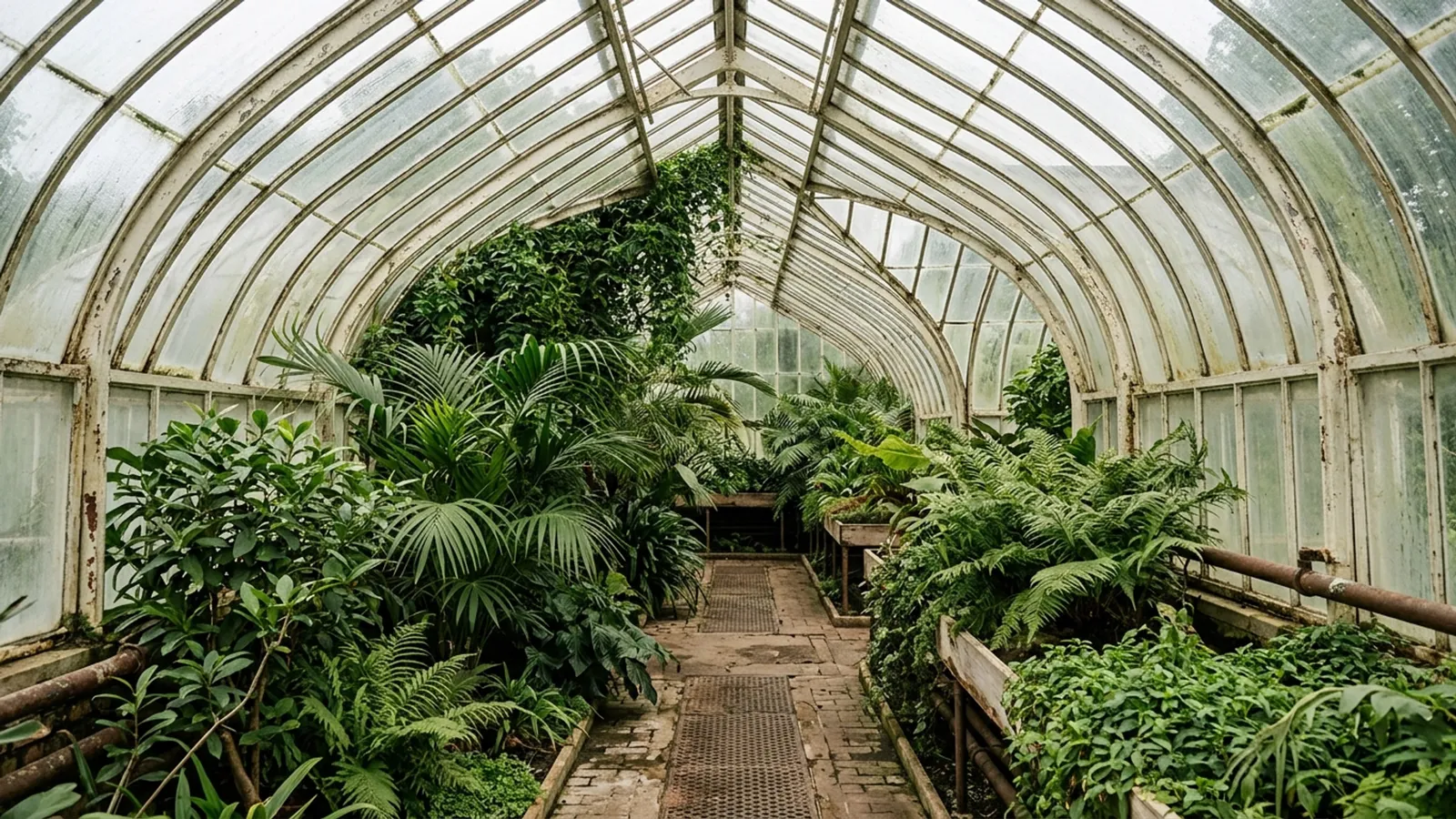
A glasshouse visit can make a distant plant environment feel tangible without pretending that a cultivated collection is the same as traveling to its wild home. At Kew, the useful experience is to compare: a leaf, a growing habit or a setting that makes you stop and ask why it looks that way.
Choose one or two open glasshouses and a question to carry between them. The aim is a considered garden outing, not a promise to see every famous interior. That distinction is particularly important while Kew prepares for major renovation work.
Start with the closures, not the postcard
As checked November 17, 2026, Kew’s Palm House renovation page says it will close in February 2027 for the final plant move, with a temporary summer reopening planned to show the empty glasshouse. Full renovation closure is then planned for autumn 2027. These are the operator’s plans, not a guaranteed timetable; its page gives differing estimates for the renovation length, so this guide does not assume a reopening year.
The Palm House visitor page says it remains open ahead of the renovation, with plants already being moved. An older photograph is therefore not a reliable promise of the planting on your date.
There are separate restrictions elsewhere. Kew’s planned-closures page lists the Princess of Wales Conservatory as closed from January 4 to February 4, 2027, followed by access restricted to specified Orchids timeslot holders during the festival period. Check the complete current notice before assuming normal garden admission gives access to that building on your day.
Choose the comparison you actually want
Kew describes the Princess of Wales Conservatory as containing ten climate zones, including dry and wet tropical settings. The Temperate House focuses on temperate plants, including threatened island flora.
Those descriptions suggest several possible questions. How does leaf shape differ between the displays you can visit? Which plants invite you to look up, and which reward looking close to the ground? How does the interpretation describe the relationship between a plant and its environment?
Keep the question open. A fleshy leaf or a spiny outline can prompt an investigation, but it is not permission to invent an explanation. Use the labels and interpretation to test your first impression. It is perfectly reasonable to finish with a better question rather than a confident answer.
Look closely at a small number of plants
Begin with one plant that catches your eye. Look at its overall form before photographing details. Then compare the label with what you thought you were seeing. Does knowing the place it comes from change what you notice?
An invented observation exercise could be to draw the outline of two leaves from different displays, if conditions and venue rules allow. The drawing need not be good. Its value is making you notice a curve, texture or arrangement that a quick photograph might pass over.
Do not touch, collect or move plant material to improve the comparison. Follow the signs and instructions on site. These are living collections being cared for, not props arranged for a visitor’s photograph.
If you take pictures, make a small set with a reason: the whole plant, a detail and the label where photography is permitted. That is more useful for remembering a question later than a large album of unnamed leaves.
Plan the garden around the glasshouses
A glasshouse outing still includes outdoor movement between buildings. Read Kew’s current map, entrance information and opening times rather than arriving at the main closing time expecting every attraction to remain available.
Build in rest and weather choices. If a particular building is closed, decide whether another open collection still gives you the experience you wanted. If not, choosing a different day or a different activity is better than trying to recreate a postcard route through unavailable spaces.
Access needs deserve a route-specific check. The Temperate House page directs visitors needing step-free access to its western side. That does not establish the suitability of every path or interior feature across Kew. Ask about the specific buildings and viewing positions that matter to you.
The cost is garden admission plus the practical outing: transport, refreshments if wanted and any separately ticketed event. The article quotes no current ticket price or assumed festival entitlement. Read the terms for the date you are actually considering.
Leave with something you will notice again
The lasting result might be a question about one familiar houseplant, or a new interest in the conditions plants need. You do not have to turn the visit into a major botanical project. A small field journal can hold a sketch, a name and one question to look up afterward.
If London is a longer stay, RESTED’s London routine guide helps think about an outing as part of ordinary life. Use London’s place page for other covered experiences instead of cramming unrelated attractions into the same day.
For another form of concentrated looking, spending time with one painting offers a different setting for the same habit: fewer objects, more attention.
Common questions
Will the Palm House be open in 2027? Kew has announced several phases of closure and temporary access. Read the latest renovation page for your dates rather than treating 2027 as one uniform operating season.
Does a garden ticket guarantee every glasshouse is open? No. Planned closures, maintenance, safety restrictions and special-event access can affect individual buildings.
Do I need to understand plant science first? No. Choose a simple comparison, read the interpretation and separate your observations from conclusions you have not yet checked.
Sources checked November 17, 2026: Palm House renovation timetable; Palm House visitor information; planned closures; Princess of Wales Conservatory; Temperate House; opening times.