Read one water-saving choice at Tucson’s Mission Garden
Look at one cultivated bed and ask how its arrangement affects shade, moisture or water delivery.

Visit Tucson’s Mission Garden with one growing question in mind. The garden’s account connects agriculture at the site with several communities and periods. Keep the focus on one bed and use the garden’s own interpretation to understand the practice it represents.
Find one visible clue about water
Pick a bed from the paths and see whether you can identify a delivery line, a shallow basin, mulch, or shade from another plant. Look at how the feature sits in relation to soil and roots. The garden says information boxes sit near most plots, and a welcome-kiosk brochure has a map. If you find a staff member or volunteer available to explain the feature, ask what the feature does and under which conditions it helps. Record your observation and the explanation separately. Measuring water use would take a different kind of visit.
Compare the bed with a nearby example only if you can follow the paths comfortably. A change in shade over one small area may be enough to explain why the question matters.
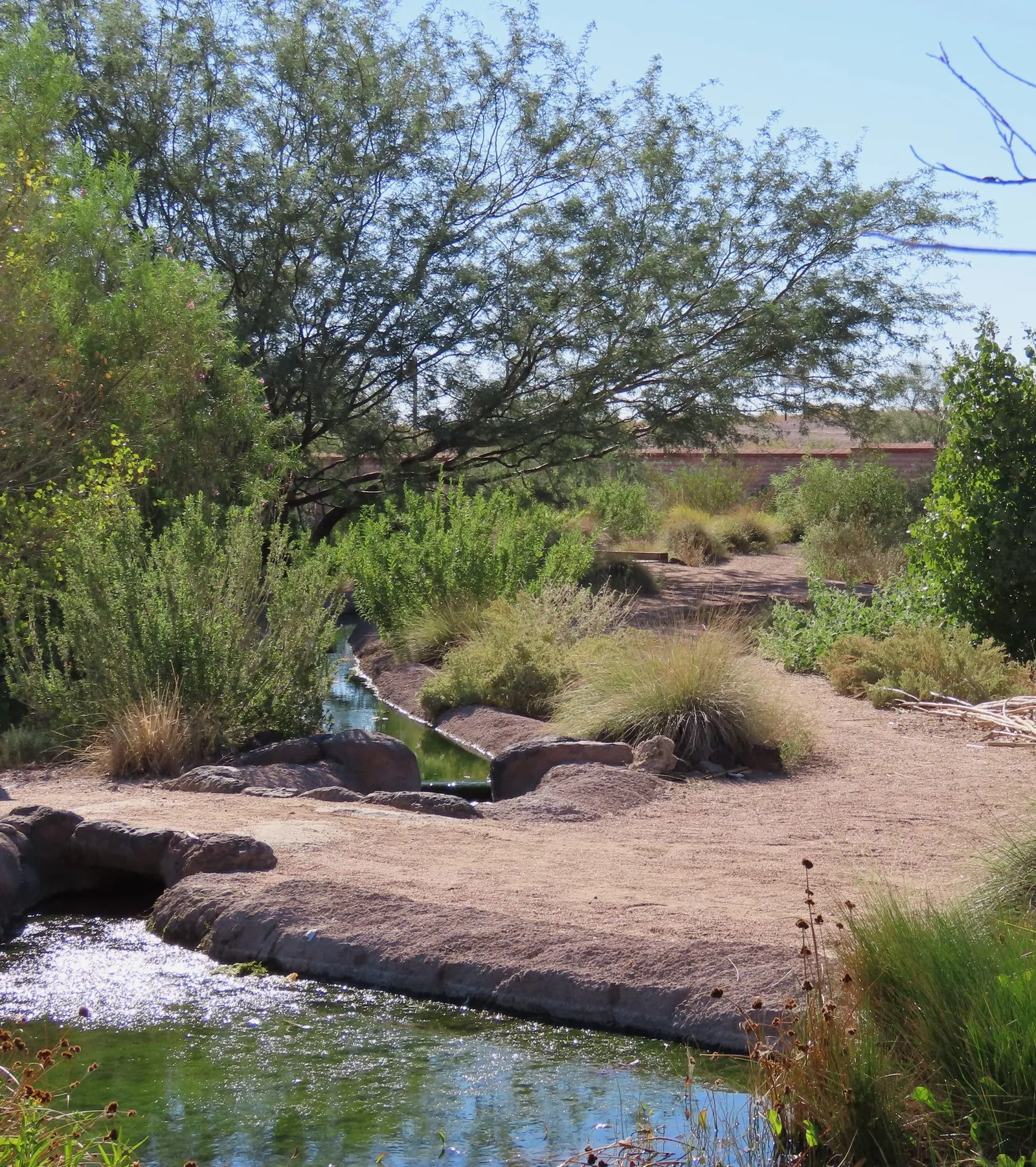
Image credit. Model acequia at Mission Garden (Tucson) · Joering · CC BY-SA 4.0. Resized; this adaptation is shared under the same license.

Keep the visit short in exposed weather
Check the garden’s current visitor information before leaving, especially if heat or a restricted path might change what you can see. Carry water, use a route within your comfort and save the second bed for another time if you need to. The garden’s timeline gives context from home if public access changes.
Will I see traditional irrigation in operation? Plan around a visible bed or public explanation. The garden’s FAQ says its recreated canal, or acequia, is not used to irrigate the plots; the beds are watered by drip irrigation, which uses much less water than flooding.
Sources
- Mission Garden · Visit
- Mission Garden · Site history
- Mission Garden · Frequently asked questions
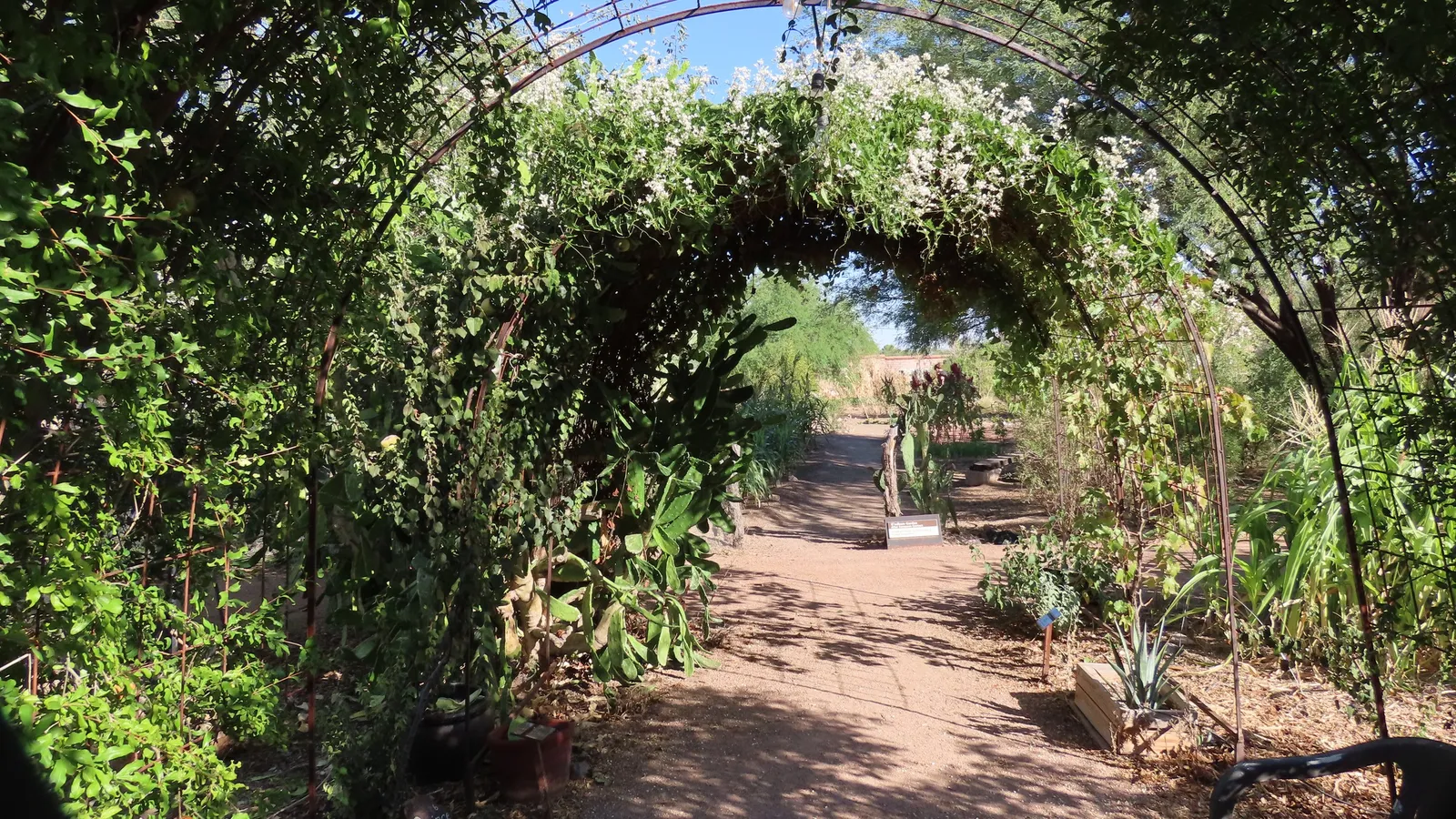
- Hero photo. Arbor at Mission Garden (Tucson) · Joering · CC BY-SA 4.0. Cropped and resized; this adaptation is shared under the same license.
