Visit Skara Brae and imagine the ordinary work of an ancient home
Begin an Orkney archaeology experience with houses and daily life, rather than trying to fit every monument into one day.

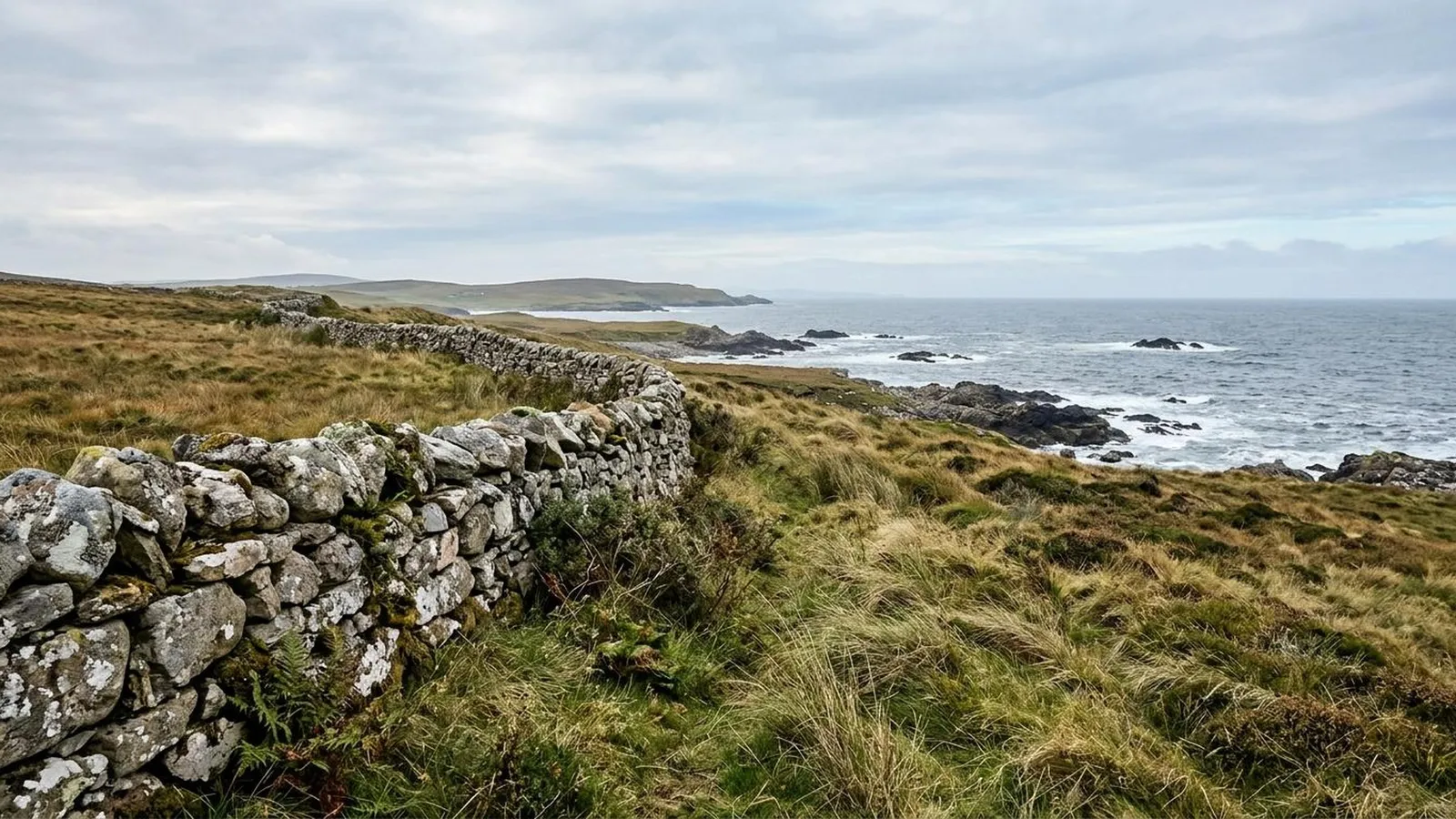
A house can make the distant past feel unexpectedly close. You begin by looking at an archaeological place and find yourself asking ordinary questions: where people slept, where they kept things and how a household worked.
Skara Brae in Orkney offers that kind of starting point. Historic Environment Scotland describes the Neolithic settlement, its surviving stone features and a replica house intended to help visitors imagine an interior.
Instead of treating it as the first stop in a race around monuments, give the settlement a question worth spending time with.
Begin with a home rather than a superlative
You might choose “What makes this recognizably a place to live?” as the thread for the visit. Look at the features the site interpretation identifies and ask what their arrangement suggests.
Historic Environment Scotland describes stone beds and dressers within the surviving houses. Those terms can help you begin noticing, while the interpretation should guide what is known and what is reconstructed.
Avoid filling gaps with an invented complete story of a particular family. The pleasure is in connecting evidence with questions, not pretending every uncertainty has disappeared.
Keep reconstruction and survival separate
The official visitor description distinguishes the replica house from the path overlooking the ancient buildings. That difference is part of understanding the experience.
Use the reconstruction to help imagine space, then look again at what survives. Ask how the interpretation has been developed and what you can actually observe from the visitor route.
Do not assume that access to an archaeological settlement means being able to enter each original dwelling. Plan around the current permitted route rather than a photograph taken from another position.
Give the visit a manageable shape
Check the site’s current hours, ticket arrangements, facilities and access information. Ask about surfaces, weather exposure and assistance if those affect your plans.
Choose transport that leaves time for the visit rather than requiring you to watch the clock throughout. If you are arriving as part of a larger Orkney holiday, consider making this the main experience of a day.
You could add another heritage place only if it deepens the question you brought. A large tally of sites may create less understanding than a smaller, better-paced visit.
Allow the island setting to remain present
A heritage site exists within a landscape and a living place. Leave some room to notice that relationship without assuming you know how the coastline or daily life looked in the Neolithic.
Follow signs and staff guidance, especially around protected remains and boundaries. Do not move closer to an object simply to improve a photograph.
If conditions change, let the visitor arrangements determine the visit. The trip is not made more authentic by ignoring the measures intended to protect the place.
Take a question away
Afterwards, record one feature you can describe and one question you would like to explore further. A museum visit, a reading project or another carefully chosen Orkney site could follow.
You do not need to understand all of Neolithic Orkney in a single afternoon. You may instead leave with a stronger interest in how people organized an ordinary day in a world very different from yours.
That is a satisfying bucket-list result: a famous place that has become something more specific in your mind than an image of old stones.