Follow an ancient-history question into Şanlıurfa’s archaeology museum
Use a museum encounter to deepen the questions raised by Göbekli Tepe, keeping excavated objects, reconstructions and interpretation distinct.

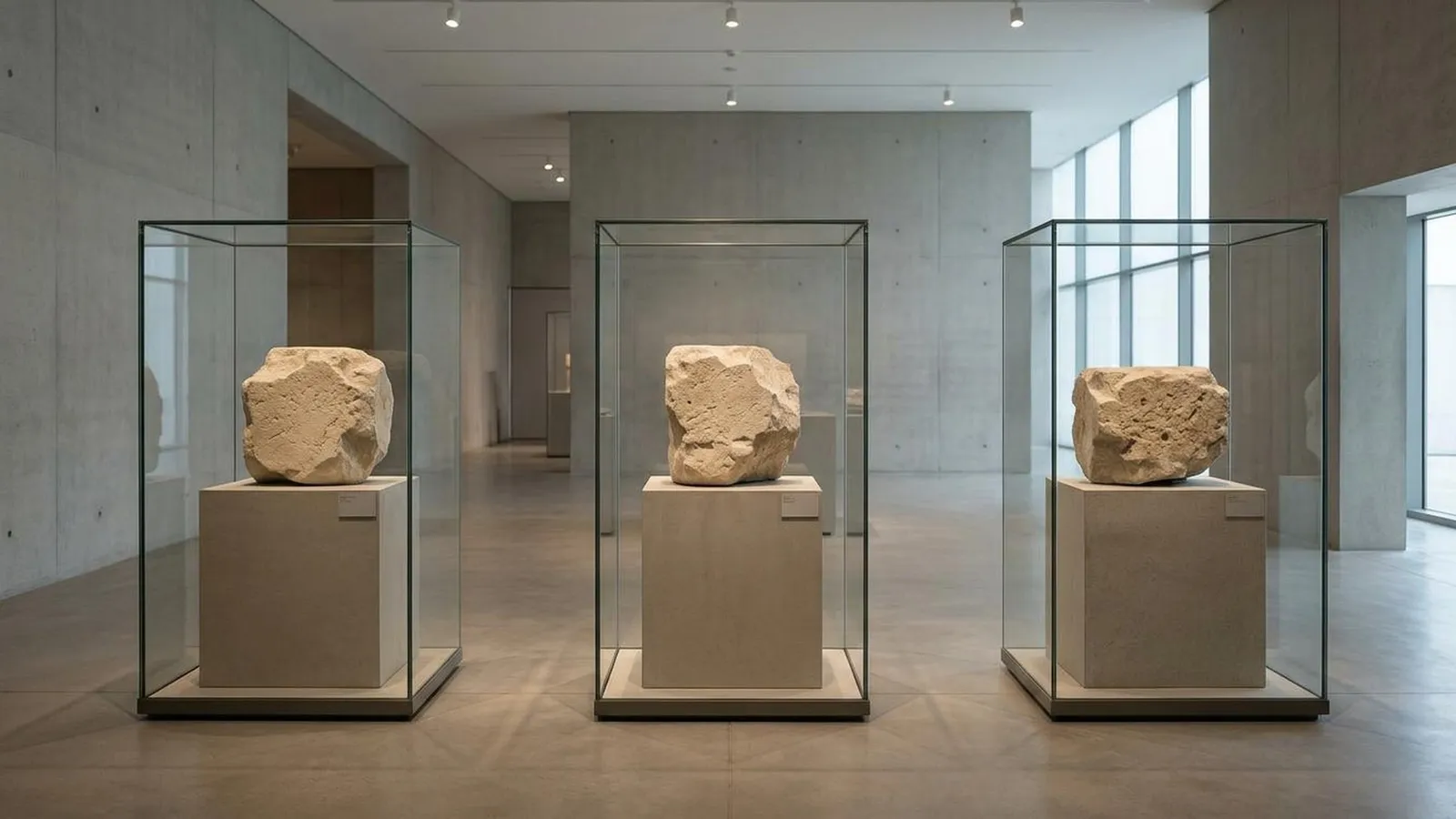
An archaeological site can leave you with more questions than you brought. That can be a reason to visit a museum, rather than a sign that the first visit failed to explain enough.
In Şanlıurfa, make the archaeology museum a place to continue one question about the human past. You might want to understand how people organized a shared space, what an object can reveal about ordinary life, or how a reconstruction changes your sense of a surviving fragment.
This is a worthwhile experience in its own right. It does not need to become a hurried extra attached to every nearby ancient site.
Bring one question from the landscape
The Ministry of Culture’s museum account describes a Göbekli Tepe D-temple replica, material from Nevali Çori and displays spanning different periods. That gives you a concrete reason to compare forms of evidence, rather than expecting every room to provide another spectacular object. Read the museum’s account.
Begin with one distinction: are you looking at an excavated object, a reconstructed setting or an interpretation of how something may have worked? Each can help you learn, but they do different jobs.
A reconstruction may make scale easier to imagine. A fragment may bring you closer to the surviving material. A label may explain an argument that neither could establish alone. Let the exhibition help you keep those roles separate.
Give a detail time to become interesting
Choose something smaller than the whole sweep of prehistory. A tool, a surface or an arrangement of objects might hold your attention. Ask what is known about its context and what remains uncertain.
With a companion, each choose one question rather than assigning yourselves the same favourite exhibit. You may notice that one person wants a story about daily life while the other is interested in how archaeologists reach a conclusion.
Our Göbekli Tepe guide offers a related approach to the site itself. Keep the two encounters distinct: a museum display does not establish what you can currently enter or see at the archaeological site.
Plan the museum day on current information
Do not carry an old extended-hours notice into a new season. A Ministry announcement reviewed for this draft applied specifically from April 25 to October 1, 2026. It does not establish evening opening for a November visit.
The museum listing also contains inconsistent admission-price and eligibility rows. We have not turned those into a usable price table. Confirm current opening, entry charges and any access or language needs directly before arranging the day around them.
Leave the rest of the itinerary modest. You could put the museum before a site visit to develop a question, or afterward to pursue something you noticed. There is no need to prescribe one order for every traveller.
The lasting result may be a more careful way of describing what you saw: less confidence in an easy superlative, more interest in the evidence. For an ancient-history journey, that is an experience worth making room for.