Read Porto’s tile stories at São Bento station
Begin a Porto walk with one focused encounter: the painted tiles in a working railway station.

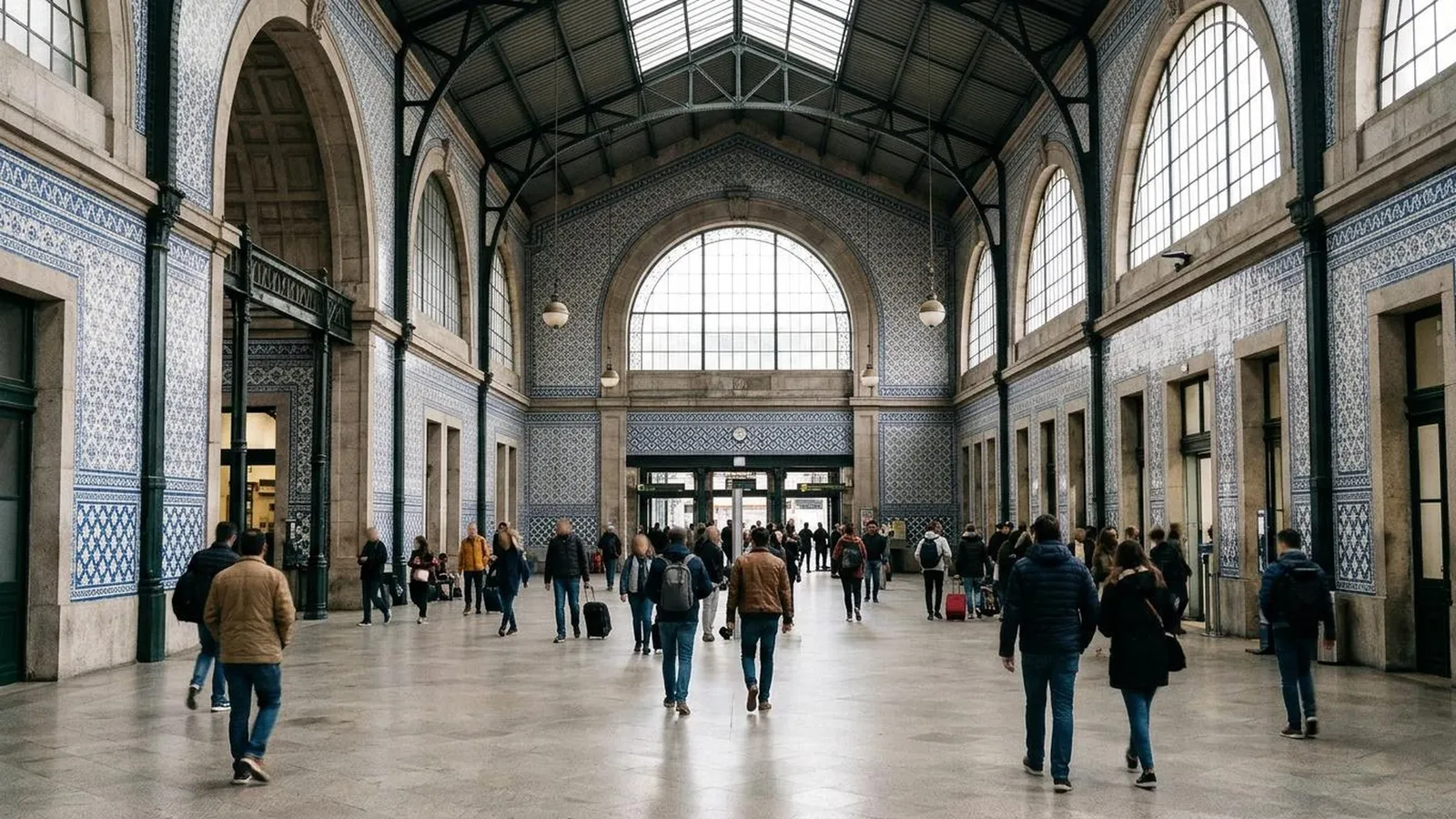
A railway station is usually somewhere you are trying to leave. At São Bento in Porto, give yourself permission to arrive without an immediate train to catch. The station’s entrance hall offers a reason to stop: painted tiles that turn a public interior into a place for looking and reading.
Make this the anchor of a short Porto outing rather than one stop in a race through the city’s best-known sights. The bucket-list experience is specific: spend time with the tile stories at São Bento, then step back into the city with something more than a photograph of blue walls.
Start with the room, then choose a scene
Visit Porto identifies the entrance hall’s tiles as the work of Jorge Colaço, depicting Portuguese history, life and the development of transport. The station occupies the site of the former São Bento de Avé-Maria convent, with architecture by Marques da Silva. That is enough background to begin looking; you do not need to arrive having memorized every scene. Visit Porto’s São Bento information
First take in the relationship between the pictures and the space. Then choose one panel and slow down. Look for the figures, movement and details that help you understand what kind of event is being represented. If a label or a reliable guide identifies the subject, compare that explanation with what you first noticed.
Treat the scenes as representations with an artist and a context, rather than windows through which history can be read without interpretation. A good question is “what has the artist chosen to show?” You do not need a complete historical account to begin seeing more carefully.
Keep the visit separate from catching a train
The official listing places the station at Praça de Almeida Garrett. Plan the approach using a current map and conditions on the ground. If you are also traveling by rail, allow a separate margin for finding the correct service; looking at the hall is not a substitute for checking departures and platform access.
Keep doorways, circulation routes and passenger information visible to the people using the station. A photograph is worth taking only from somewhere you can stand without obstructing them. Do not cross barriers or assume that being interested in the building gives access to operational areas.
For anyone who needs step-free access or seating, establish the route to the particular part of the station you want to visit. A tourism listing’s broad accessibility field cannot answer every question about an approach or interior. Choose the practical visit you can enjoy rather than an assumed standard route.
Give the walk a theme
After the hall, you can keep the outing small. Pause somewhere appropriate in the surrounding public area and make a short note about one scene, color or architectural detail you noticed. If you continue walking, choose one additional place that genuinely interests you and check its access separately.
This need not become an invented fixed circuit with an optimistic walking time. Porto’s wider attractions can wait for their own visits. The point of using São Bento as an anchor is to give a city walk a subject, rather than a longer list of stops.
You might pair the experience with a few pages about Portuguese history before or after the trip, or compare how another station represents the place it serves. Those connections can grow from your curiosity instead of being prerequisites.
The satisfying finish is being able to describe one thing you saw in the tiles and why it caught your attention. A familiar travel photograph has become a personal encounter with a work, a building and the city moving through it.