Follow one name at Nantes’s Memorial to the Abolition of Slavery
Begin with a public inscription and use the memorial’s interpretation to understand what the historical record preserves.

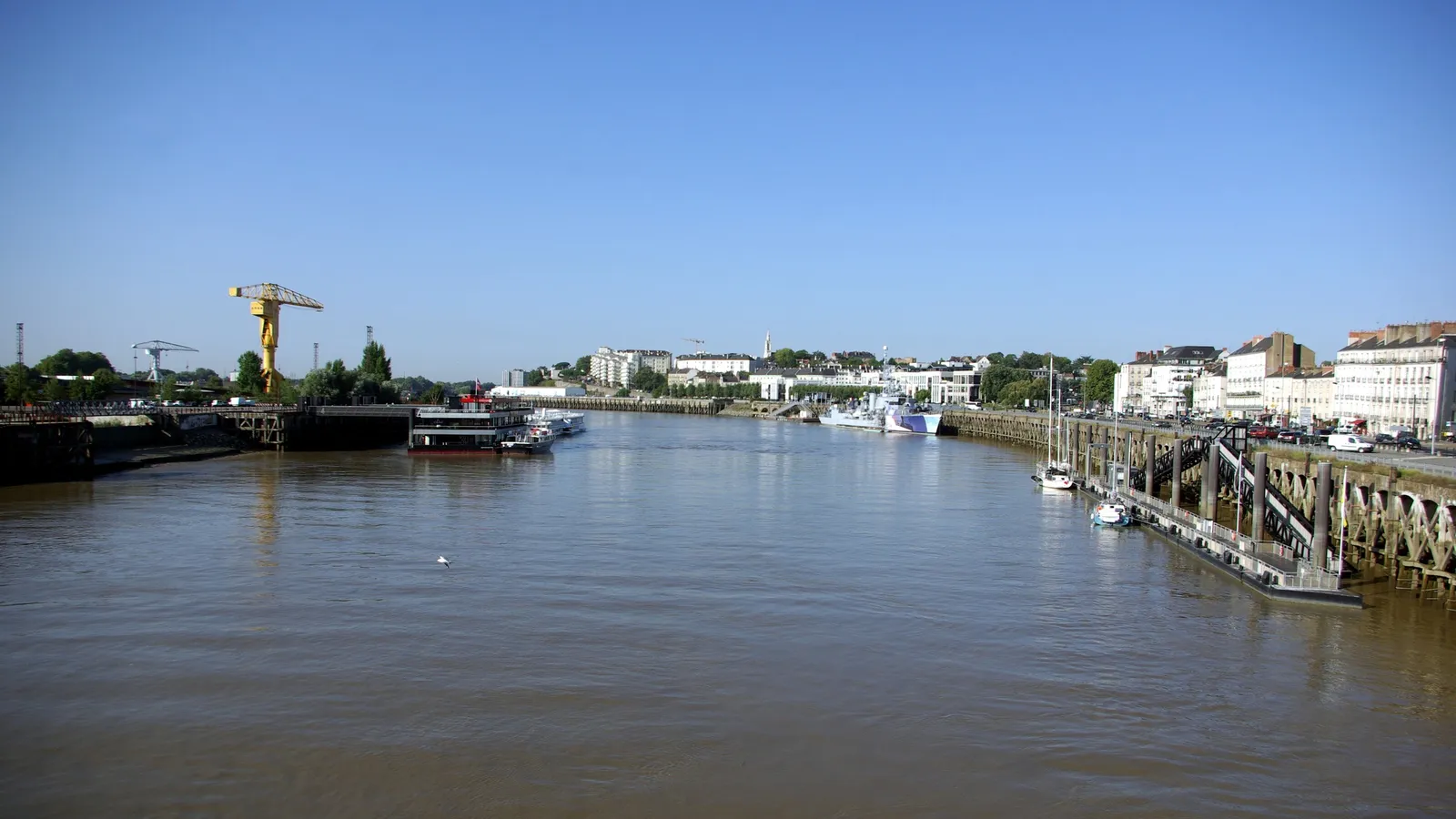
The Loire beside Quai de la Fosse in Nantes.
Give yourself time for one part of the Nantes memorial on the Quai de la Fosse. The memorial’s own site describes Nantes as the most active slave-trading port in 18th-century France, and its discovery page (both checked November 24, 2026) says the walk along the Loire holds 2,000 glass inserts: 1,710 commemorate the names of slave ships and the dates they left Nantes, and the rest name trading posts and ports in Africa, the Americas and the Indian Ocean. An underground passage carries texts from four continents on the trade and its abolition. Choose one inscription you can read carefully. The memorial’s online account can help if weather, language or access makes the route difficult.
Follow one name or dated entry
Pick a ship name, a person named in an interpretive text, or a date. Note where you found it and what the memorial says it refers to. Use a second official text to see whether it connects to a voyage, a record of the port or an account of abolition. The inserts record ships and departure dates rather than the people held aboard them. Keep that difference visible in your note.
If you cannot follow an individual beyond the plaque, read the context that explains what kind of record survived. You don’t need to attach a story that the source cannot support.
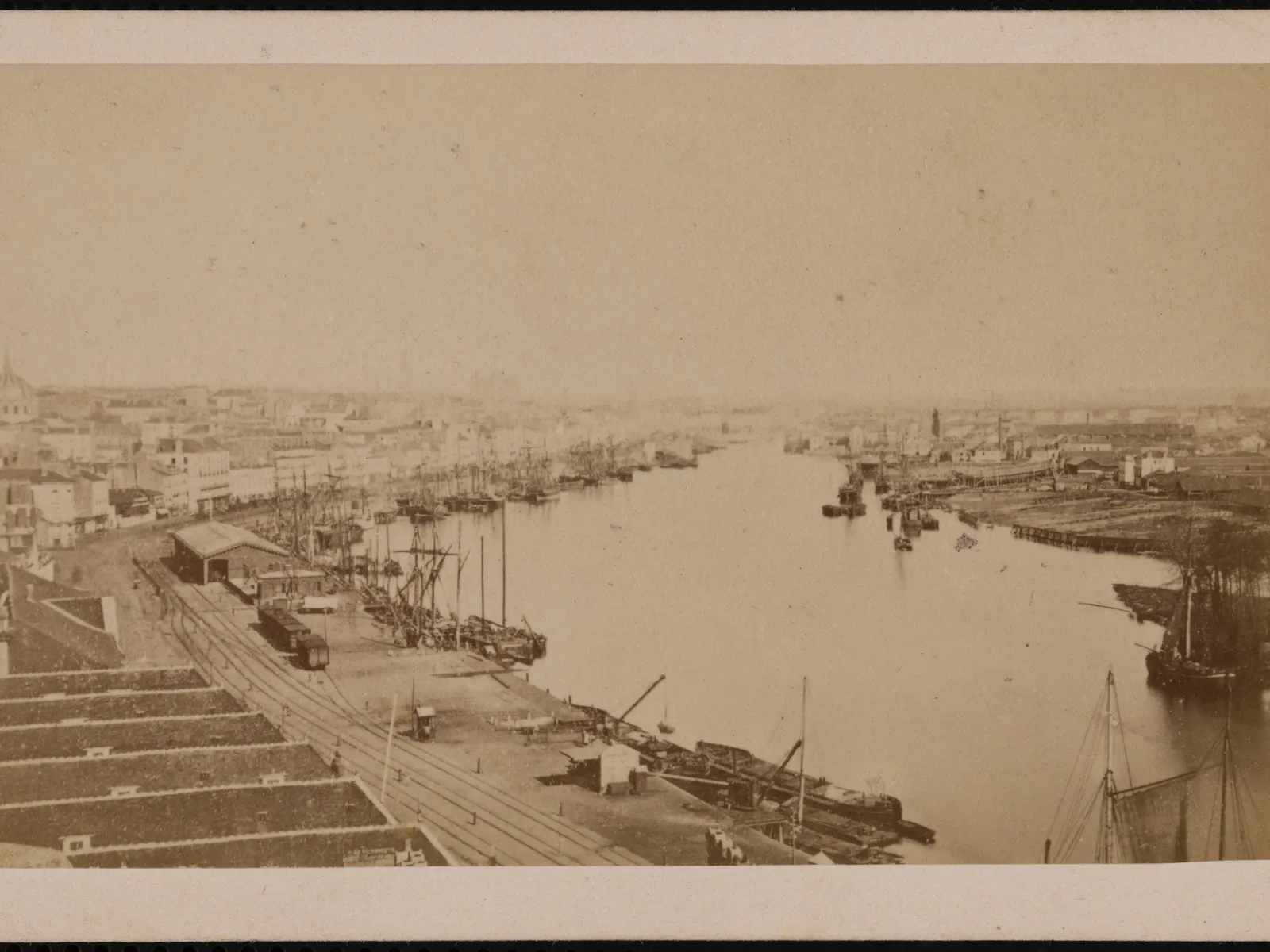
Image credit. Nantes quai de la Fosse · Victor Girard · Public domain. Cropped and resized.

Leave some room after the visit
Take time to stop in a public space where you can reflect. Write one question you could take to the Nantes History Museum or a primary source the memorial identifies. The practical information page says the memorial is free, open daily and needs no reservation, and that an elevator serves the underground section; check it for current hours.
Sources
- Nantes · Memorial to the Abolition of Slavery
- Nantes · Discover the memorial
- Nantes · Practical information for the memorial
- Hero photo. Loire - Quai de la Fosse, Nantes · Duch · CC BY-SA 4.0. Cropped and resized; the adapted image is shared under the same license (ShareAlike).
