Spend time among Karnak’s great columns
Give one part of Luxor’s vast temple landscape enough attention to understand more than its size.

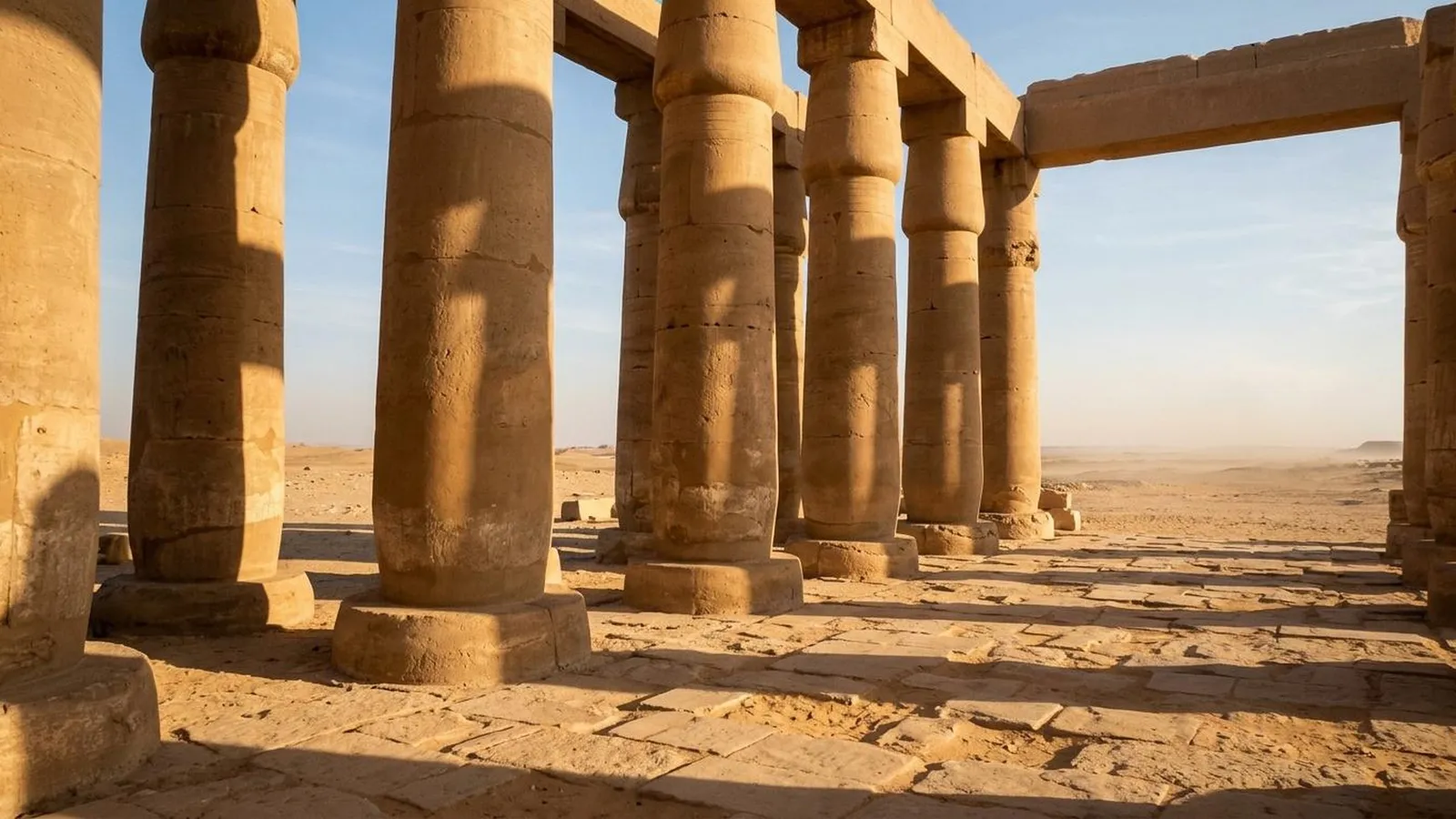
Some ancient sites are so large that trying to see everything can make them difficult to remember. At Karnak, choose a more focused ambition: spend time with the Great Hypostyle Hall, then use what you learn there to understand something of the wider complex.
The experience is not only about standing beside enormous stonework. It is also an opportunity to think about how a place accumulated meaning, construction and royal attention over time.
Begin with the right place
Karnak is on the east bank at modern Luxor. Egypt’s Ministry of Tourism and Antiquities describes a complex of temples and chapels, with the Great Temple of Amun at its heart. Karnak and Luxor Temple are distinct sites linked historically by a processional way; their names should not be treated as interchangeable. Ministry site account
Use a current site plan or a suitable guide to orient yourself, then choose a small set of places to give your attention. The Great Hypostyle Hall provides one clear focus. The ministry identifies 134 columns there and explains that different rulers contributed to the hall and its decoration.
That history invites a useful question: what belongs to the construction, what belongs to later decoration and what has changed through preservation or restoration? You do not need to arrive with every royal date memorized. An explanation attached to something visible will usually mean more than an isolated list of reigns.
Let interpretation make the scale understandable
At first, take in the arrangement of the hall. Then choose one detail to investigate: a relief, a column form or a trace of decoration identified by your guide or the site interpretation. Move from the overall impression toward something you can describe clearly afterward.
If you hire a guide, agree the scope and practical arrangements before the visit. Ask for time to look as well as time to listen. A guide can help you understand the evidence without turning every uncertain interpretation into an unquestioned fact.
Avoid judging the visit by how many additional temples you can fit into the same day. Another site may reward a different kind of attention and a separate visit. A focused Karnak encounter can be enough, particularly when the scale and conditions already make the outing demanding.
Plan for the site you will visit
Check current admission, opening, permitted routes and any closures through official visitor information. Do not assume a general ticket includes every separate area or an evening event because it shares the Karnak name.
Ask about walking surfaces, steps, distances and places to rest if those affect your plans. Photographs of a broad approach do not establish that every part of an archaeological site offers the same access. Choose the time of day with local conditions in mind and arrange transport back to your accommodation.
Follow the site’s conservation rules, including restrictions on touching, climbing and photography. A clearer view of a carving is not a reason to cross a barrier or improvise a route through protected remains.
Before leaving, return to your chosen detail. Can you now explain something about it that you could not have explained on arrival? That is a satisfying completion marker. The columns remain impressive, but the visit has become more than a photograph showing how small you looked beside them.