Follow tension through one loom at Ghent’s Museum of Industry
Look for where a loom holds its threads apart and where they come together to become cloth.

Start with the museum’s textile interpretation, then choose one loom you can see well. You can do the whole visit with one question. Where do the threads stay under tension, and what has to move for another thread to pass across them?
Find where the threads separate
Pick out a set of threads that run in the same direction. If the loom is threaded, follow them from farther back toward the point where they open into separate levels. Look where the crosswise thread would travel through that gap. A stationary machine, a sample and a museum explanation can together show the relationship. Keep a note of which part you actually saw moving, if any.
If the museum has a demonstration available, watch one cycle from the permitted side. Look for the moment when the gap changes and what stays fixed while it happens. Then look at the cloth side to see how the result of that movement appears.
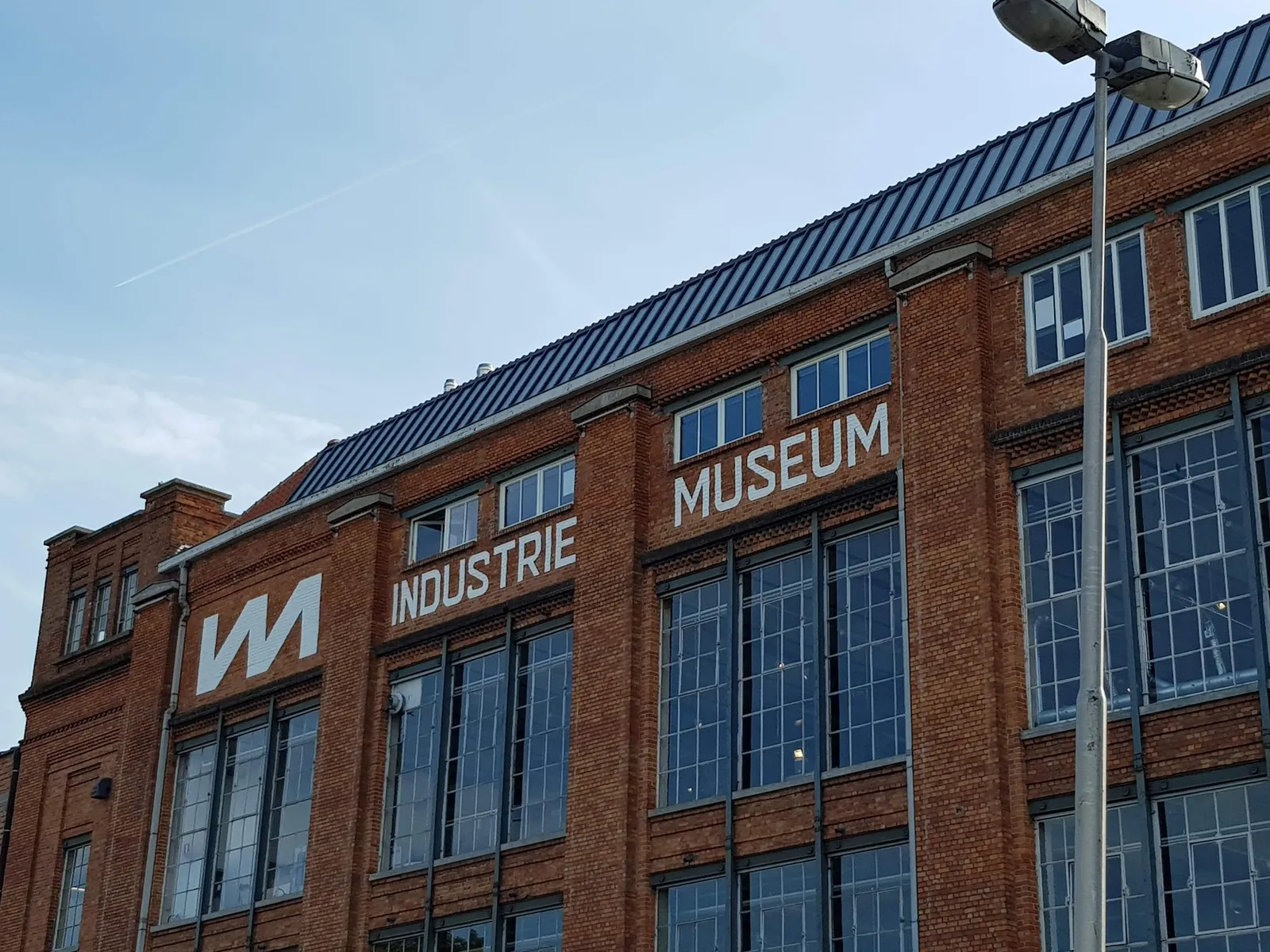
Brickwork and windows of the former cotton mill that houses the Industriemuseum.
Image credit. Industriemuseum voorgevel · Lalieka · Wikimedia Commons · CC BY-SA 4.0. Resized; the adapted image is shared under the same ShareAlike license.

Keep one useful comparison
Describe the thread path in two or three phrases and compare it with the museum’s published textile material. The museum has information about weaving on its TC2 loom, which gives you another place to look for the relationship. The museum pages cited here don’t mention loom demonstrations, so confirm with the museum first if seeing one is the reason for your visit. Work from labels, samples or recorded interpretation if the machines are still.
Sources
- Ghent Museum of Industry · About the museum
- Ghent Museum of Industry · 100% Textile exhibition text
- Ghent Museum of Industry · Weaving on the TC2 loom
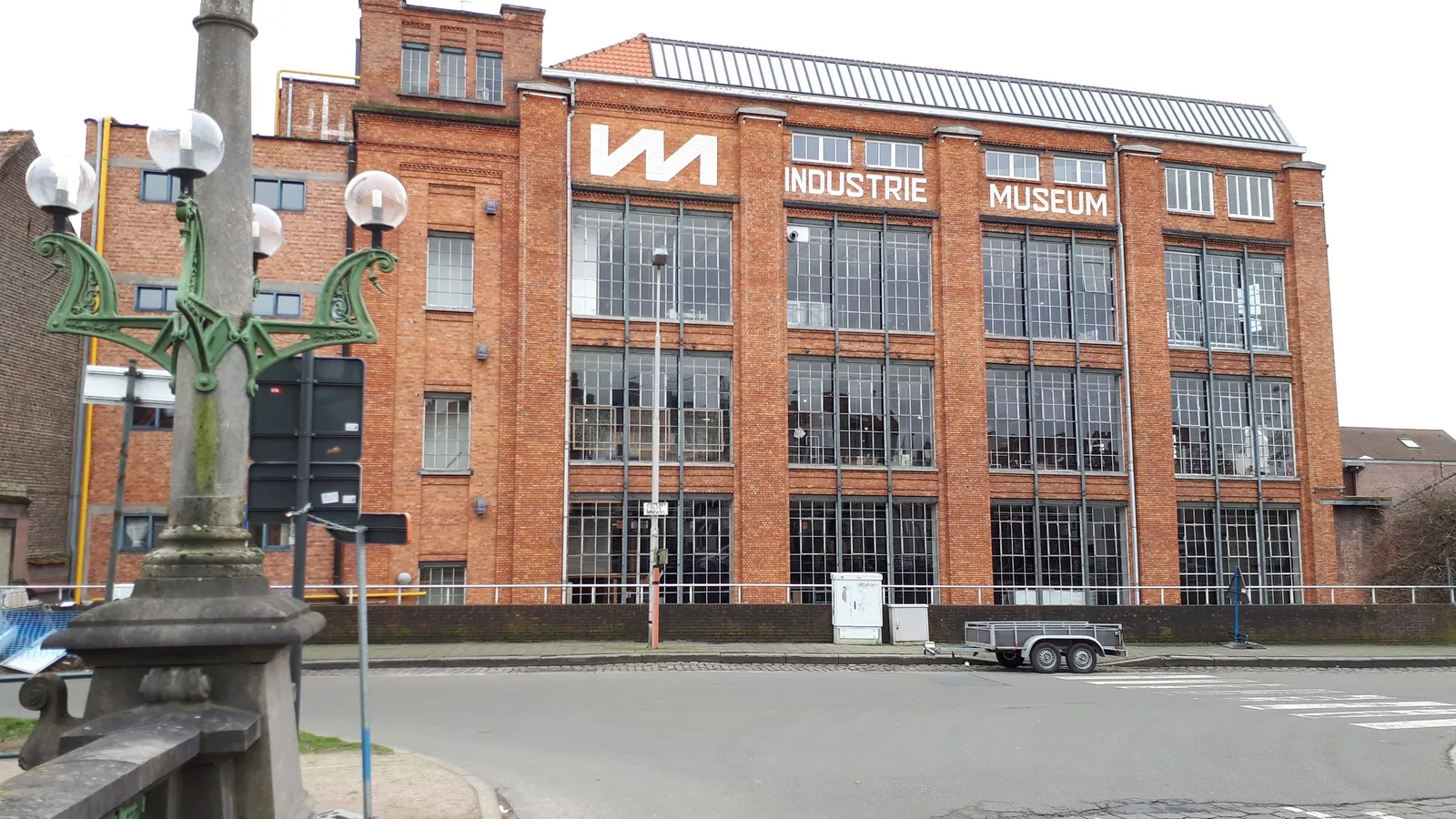
- Hero photo. Industriemuseum Gent frontaal zicht · Geertivp · Wikimedia Commons · CC BY-SA 4.0. Cropped and resized; the adapted image is shared under the same ShareAlike license.
