Take a close look at the Antonine Baths at Carthage
Use one archaeological stop to distinguish the standing remains from the histories around them.

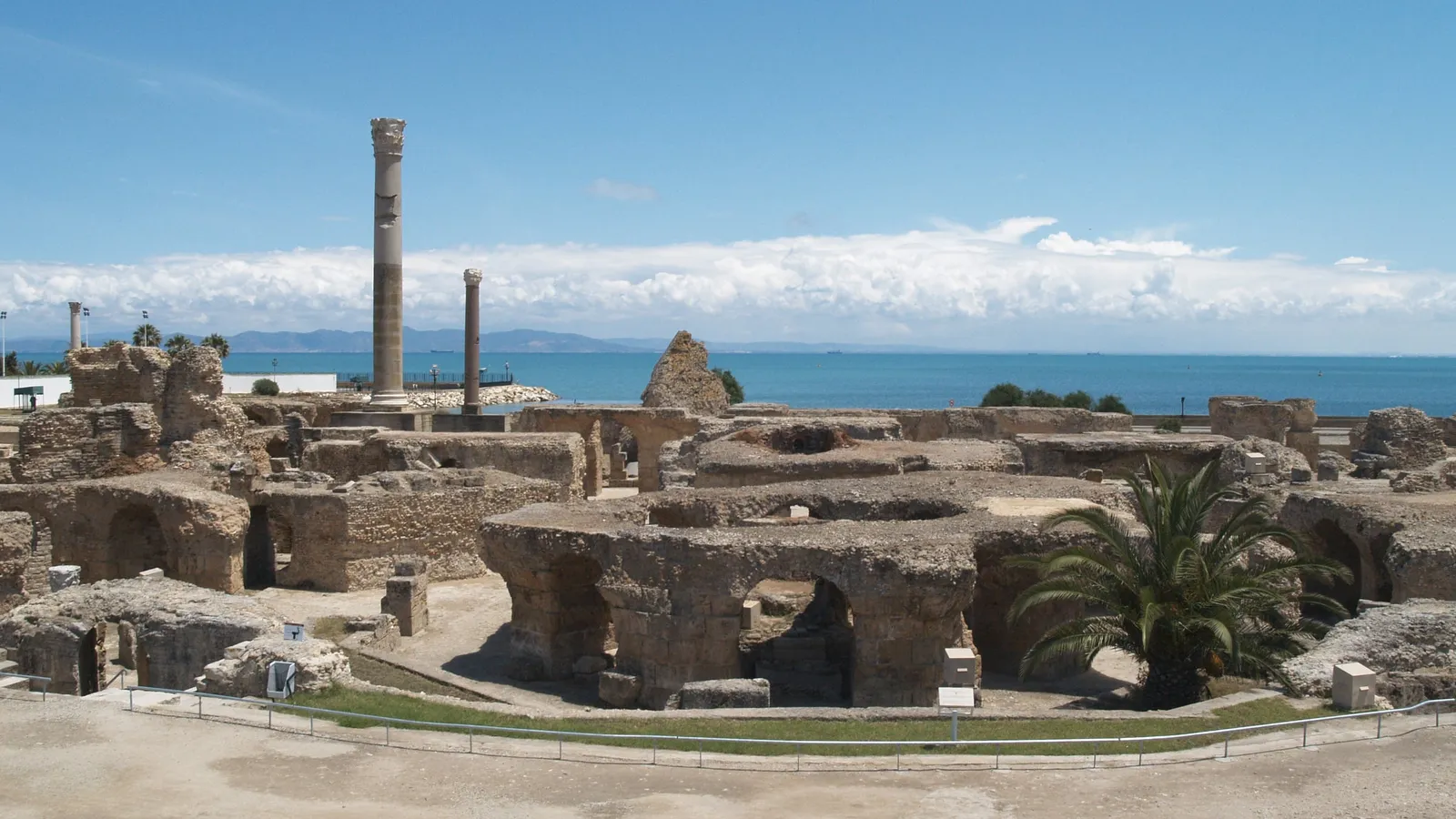
At Carthage, a single site can lead to a better question than a circuit of ruins. At the Antonine Baths, ask what a large Roman building needed to work. Then find out what the standing remains can show you about that.
Choose one view with enough interpretation
Start with the Tunisian heritage agency’s site description. Use the National Heritage Institute and UNESCO’s Carthage listing for context on the broader site. The agency describes the baths as the largest in Africa, built under Antoninus Pius and completed in 162, and notes that only the ground-floor service level is still visible. They give a particular Roman example in a place with a much longer history. Ask about current entry, paths, shade and which areas the public can reach. Don’t assume one ticket covers the places you might decide to visit later.
Use the interpretation to read a fragment
Choose a viewpoint from which you can see how one room or foundation relates to another, if permitted. Ask what the interpretation identifies as part of the bath complex and what is no longer visible. Look at the scale of the remaining materials. Imagine the question a builder had to solve, such as how somebody would get from one part of the building to another, and mark any guess as a guess.
Leave before you feel pressed to explain the whole site. Another day at the Bardo Museum gives you a closer look at objects and images.
Common questions
Does this one stop explain every era of Carthage? Use the broader official interpretation for the earlier and later layers. Is the whole site open and easy to walk? Confirm the particular public route before you go.
Sources
- Tunisia heritage agency Antonine Baths overview · checked 2026-11-19
- Tunisia National Heritage Institute Carthage · checked 2026-11-19
- UNESCO Archaeological Site of Carthage · checked 2026-11-19
- Photo: Antonine Baths at Carthage.jpg by Institute for the Study of the Ancient World, CC BY 2.0, via Wikimedia Commons; cropped and resized for layout.
