Stand inside Boston’s Mapparium globe and question the map you know
The Mapparium is a ticketed 1935 world globe inside a wider Christian Science visitor experience; its historical borders are the point, not an up-to-date map.

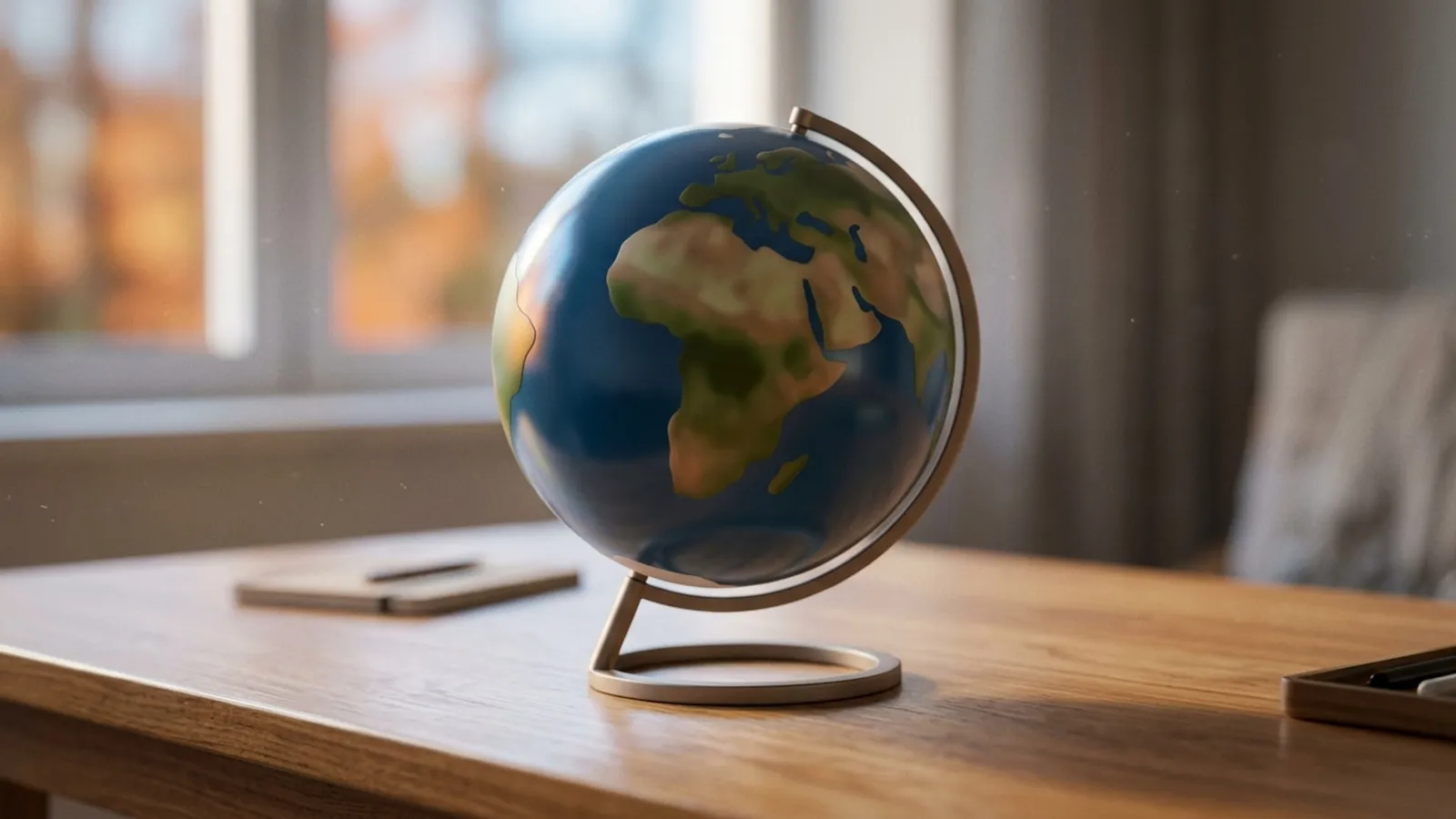
Most maps put you outside the world, looking down at a page or a screen. Boston’s Mapparium puts you inside a stained-glass globe. That change of position is the invitation: look again at the shape of the world you think you know.
The globe is also a historical object. It depicts 1935, not today’s political boundaries. A worthwhile visit notices both things—the different viewpoint and the moment in history—without confusing either with a current travel map.
Know which experience you are booking
The Mapparium is part of the How Do You See the World? experience at the Christian Science Plaza. It is not simply another room in a general-purpose geography museum. The surrounding presentation includes the Christian Science movement and its founder, Mary Baker Eddy.
The operator’s overview, checked November 17, 2026, describes the three-story globe as showing the world in 1935, with a short narration and an adjoining presentation about change since then. Naming the religious setting helps you decide whether the complete visit suits your interests; it does not require treating the institution’s interpretation as your own conclusion.
The visitor information distinguishes the ticketed globe from the other exhibits, which are free. Check the current arrangements for the particular part you want to see.
Bring a question about a familiar map
Before entering, think of how you normally picture the relationship between two places. Do you imagine them from a flat classroom map, an airline route display or a weather forecast? Which part of the world usually sits in the center of that picture?
Inside, compare that memory with the globe. Notice relative position and the way your eye travels across the curved surface. You do not need to turn the visit into a quiz about every country.
This is a suggested looking exercise, not a claim that the globe proves one modern political interpretation. A map’s date, labels and purpose remain important even when its presentation is striking. A new viewpoint can reveal a habit in your own attention without settling every question about cartography.
Let the date do some work
The official description says the map has remained unchanged since 1935. That makes a label unfamiliar to you a reason to ask about history, not automatically an error to correct in the room.
Choose one difference between the historical map and your present-day understanding. Later, look up that change through an appropriate historical source. Keep the first observation separate from the explanation: recognizing an unfamiliar border is not the same as knowing why or when it changed.
The narration is one part of the experience. Listen before deciding what further question to pursue. The useful takeaway may be quite small: a remembered name, a place whose position surprised you or a reason to read more about the period.
Leave room for listening as well as looking
The operator describes an acoustic “whispering gallery” effect inside the globe. Follow staff guidance about when to try it and avoid speaking over the presentation or disturbing another visitor.
The same principle applies to photographs. Do not rely on an old travel-blog assertion that photography is always forbidden or always unrestricted. The current visitor page allows photographs and short-form videos at the end of the tour under its stated policy; read that policy before using images beyond a personal record.
This article does not provide permission to reuse the operator’s images or another visitor’s recording. A written note afterward is an alternative if you want to concentrate on the visit rather than spend it producing a record.
Make the timed entry fit the day
The address is 210 Massachusetts Avenue in Boston. Check opening days, timed-ticket availability and the last tour rather than assuming the building’s closing time is the final arrival time.
As checked November 17, 2026, the visitor page says Saturday and Sunday afternoon tickets from 1 to 5 p.m. are available only onsite, subject to availability; advance reservations remain available for other hours. All visitors need a ticket regardless of age, even where an age-based free-admission rule applies. No current price is quoted here.
There are also holiday closures. The listed upcoming 2026 recesses include November 25–27 and December 23–26. Recheck for your date before building a Boston day around the globe. A ten-minute narration does not mean the whole outing takes ten minutes: leave time for arrival, entry and any adjoining displays you choose to visit.
Ask the operator about the access and sensory arrangements you need. A building-access statement does not describe every aspect of lighting, sound, group movement or an individual visitor’s comfort.
Connect the visit to Boston rather than a checklist
Use Boston’s place page for other experiences, and Hotel Hacker’s Boston location guide when choosing a base. Those decisions help you reach the visit; they do not make a packed itinerary necessary.
A focused USS Constitution visit is another way to approach history through a specific object and setting. It belongs to a different part of the city and a different story. There is no need to force both into one afternoon.
For a longer stay, RESTED’s slower-pace guide offers room for following a question after the outing. A visit that starts with a map can end with an evening of reading rather than another ticket.
Common questions
Does the globe show current borders? No. The operator presents it as an unchanged view of 1935.
Is the whole visitor experience paid? The official page distinguishes the ticketed globe from the other free exhibits. Confirm current ticket rules for every visitor.
Can I photograph inside? The current policy permits limited photography and short-form video at the end of the tour, subject to its terms. Check the policy for your intended use rather than assuming unrestricted publication rights.
Sources checked November 17, 2026: official experience and historical description; official tickets, closures and visitor policies.