Read a communal water channel at Birkat Al Mouz
Find an authorized view of Falaj Al Khatmeen and ask how water is shared and maintained beyond what the channel reveals.

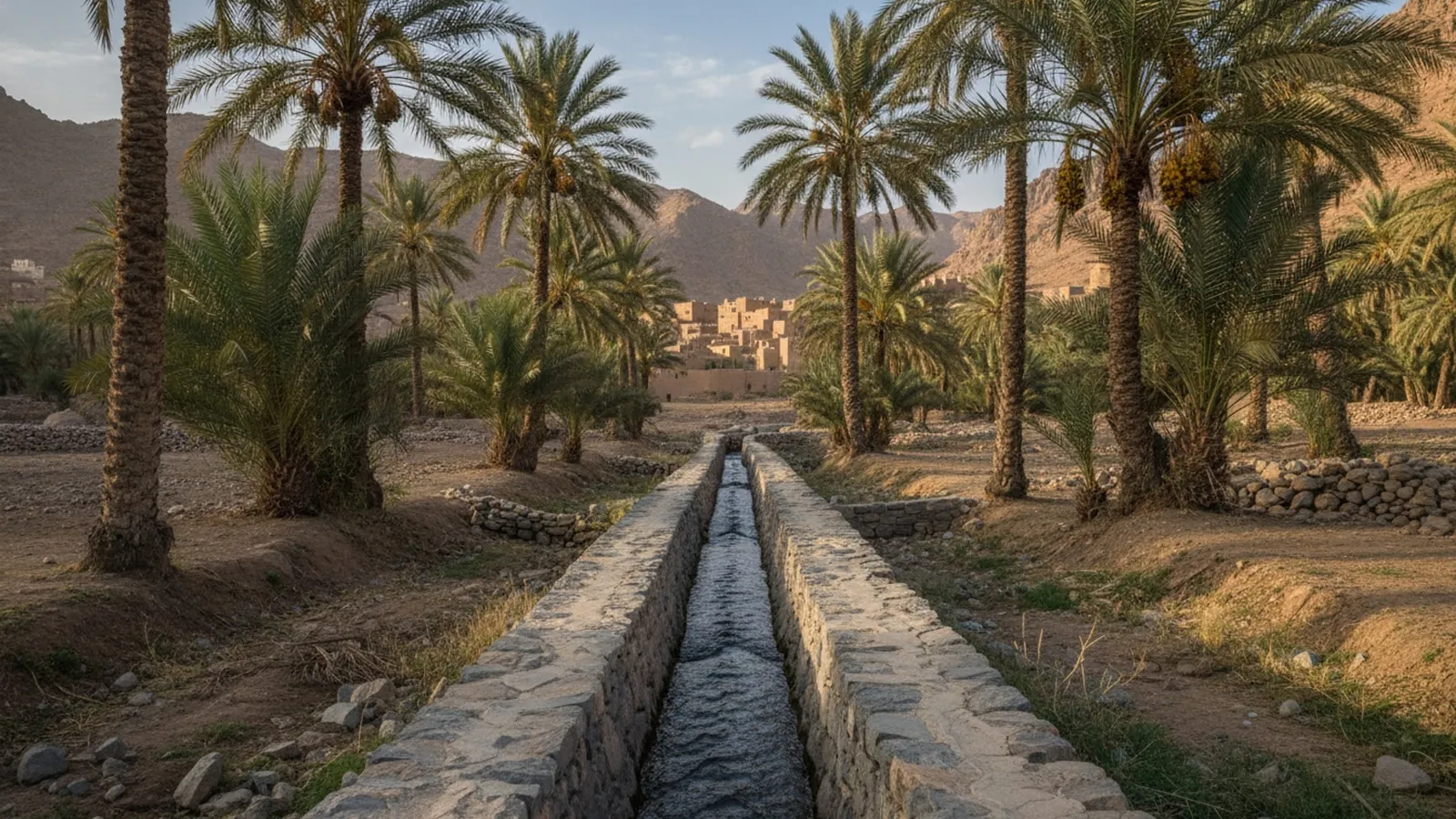
From an allowed viewpoint in Birkat Al Mouz, see if you can follow a little of the water’s route toward the cultivated ground it serves. The visible channel gives you a starting question. The decisions about sharing and maintaining that water are harder to see and worth asking about.
Find the public route before following the water
Oman’s Foreign Ministry identifies Falaj Al Khatmeen at Birkat Al Mouz as one of the aflaj included in the World Heritage listing. UNESCO’s account explains why the long use and community management of these irrigation systems matter. It names Falaj Khatmein as one of the five aflaj in the property and, with Falaj Al Jeela, the most intact still-functioning aflaj landscape, with its water used for civic as well as farming purposes. Use the site’s or a local guide’s current guidance for public approaches, where you can stand and which photographs are appropriate. A path next to a channel may lead to private land or become unsuitable. Choose a short, confirmed viewpoint before leaving.
Ask who keeps the water moving
From the authorized point, notice direction, the position of cultivated land and what keeps the water within the channel. Make a little sketch if it helps. Ask a guide how this branch fits the larger system and what residents or users want people to know about its maintenance. Keep any rule about distribution specific to the source that explains it. A turn or branch does not show how time or water is allocated.
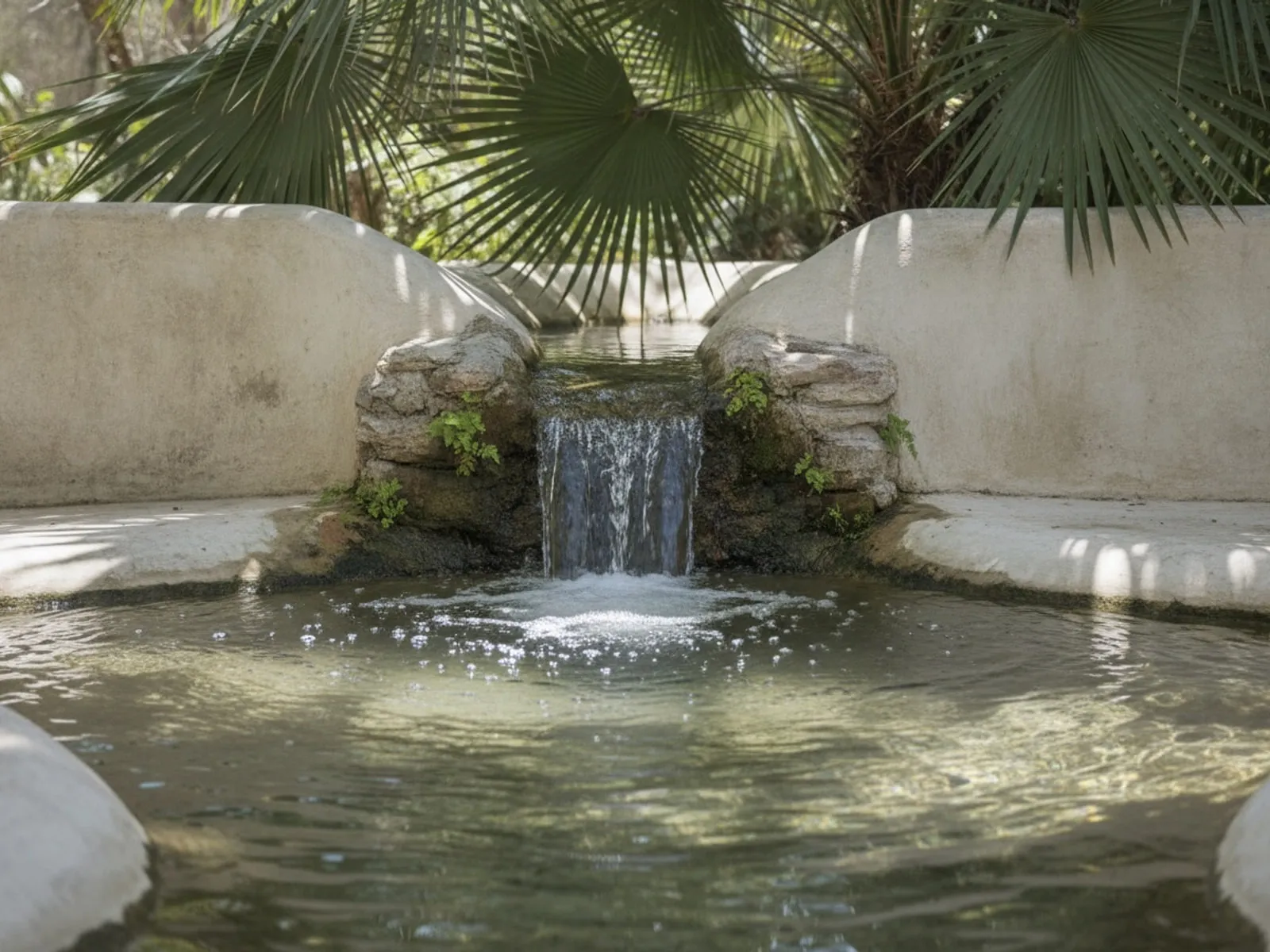
As a visitor, give the system room to work. Stay out of channels and off private land, and avoid directing people toward unverified access points. Look from the approved side without touching the water or leaving the route. If you can’t see the branch you came for, use the public view and interpretation as a complete outing.
Common questions
Can I follow the channel across an orchard? Only use public routes confirmed by the site or guide. An orchard can be working land.
What if the channel is hard to see that day? Use the heritage description to make sense of the landscape and choose a later visit if a view of flowing water is central to your plan.
Sources
- Oman Foreign Ministry on Birkat Al Mouz and Falaj Al Khatmeen · checked 2026-11-24
- UNESCO on the Aflaj Irrigation Systems of Oman · checked 2026-11-24