Read Adalaj Stepwell through its levels and light
Use one allowed viewpoint to see how the five-story stepwell leads down toward water and how light changes with depth.

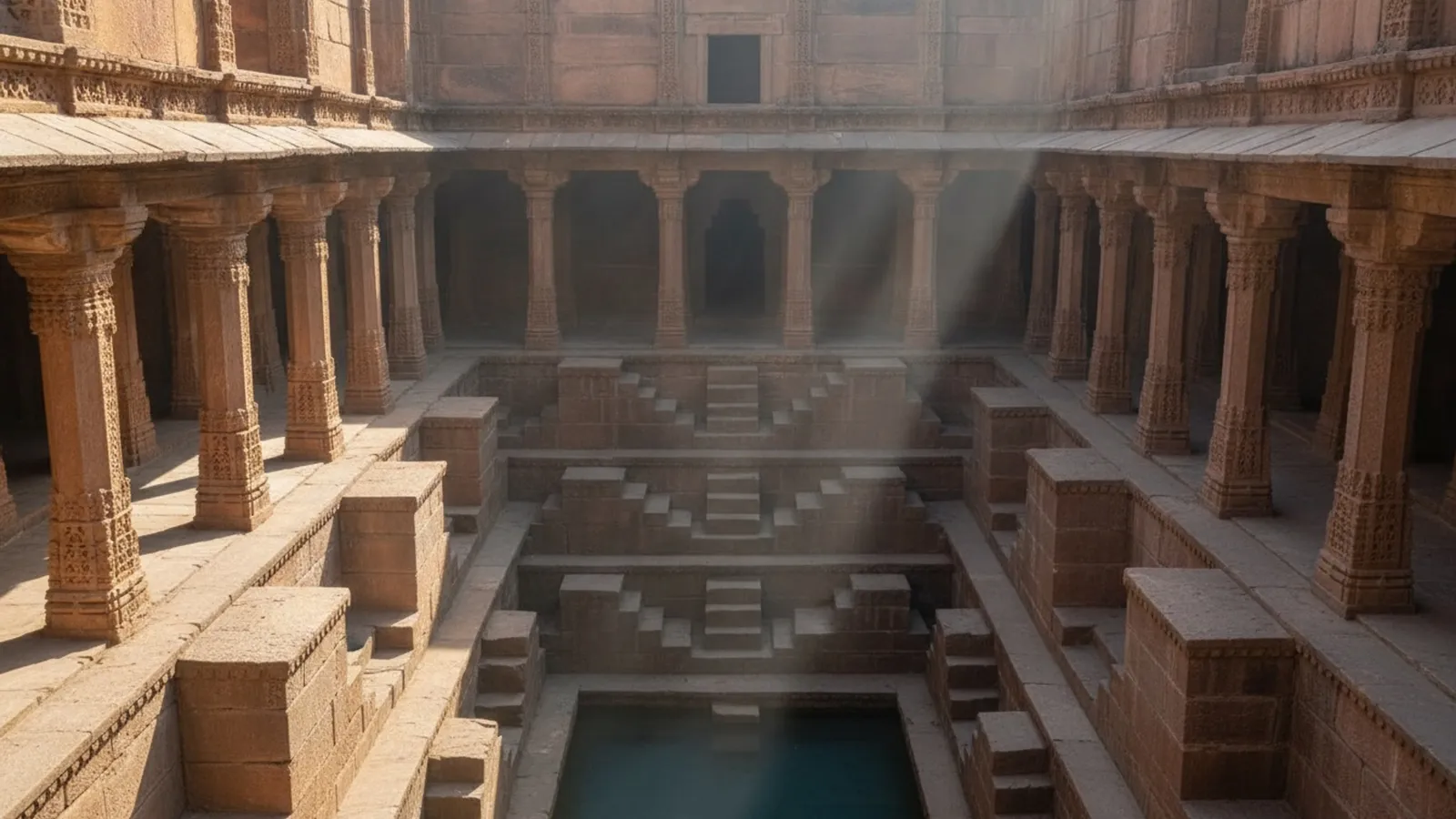
At Adalaj Ni Vav, you can ask how the building brings a person from the bright surface toward water below. The most useful first view may be one that lets you see changes in level without using all the stairs. Let the site’s access arrangements choose the part you can study closely.
Check what you can see from each level
Incredible India’s Adalaj Ni Vav page describes a five-story stepwell in the village of Adalaj, begun in 1498 under Rana Veer Singh and completed under Sultan Mahmud Begada. It sits outside the city, about 18 km from Ahmedabad Junction by the ministry’s reckoning, so treat it as a separate outing from central Ahmedabad. The page doesn’t list opening hours or an entry charge. Check the notices at the site, and on arrival confirm which levels are open and whether the upper viewpoint you want is reachable without descending. Ask about stairs, handrails and any route changes. Choose one comfortable public view to use if a lower section is closed or feels unsuitable.
Follow the descent with your eyes first
From an allowed point, find a stair, a landing and an opening that admits light. The ministry’s page notes that it grows cooler as you go down, that light and air filter through an octagonal opening, and that direct sunlight reaches the water only around noon. See what becomes shaded as the architecture goes lower. Notice whether a column or platform divides the view into shorter sections. You can draw a side-on sketch afterward to connect what you saw. Mark anything you couldn’t see as a question rather than filling in missing levels from memory.
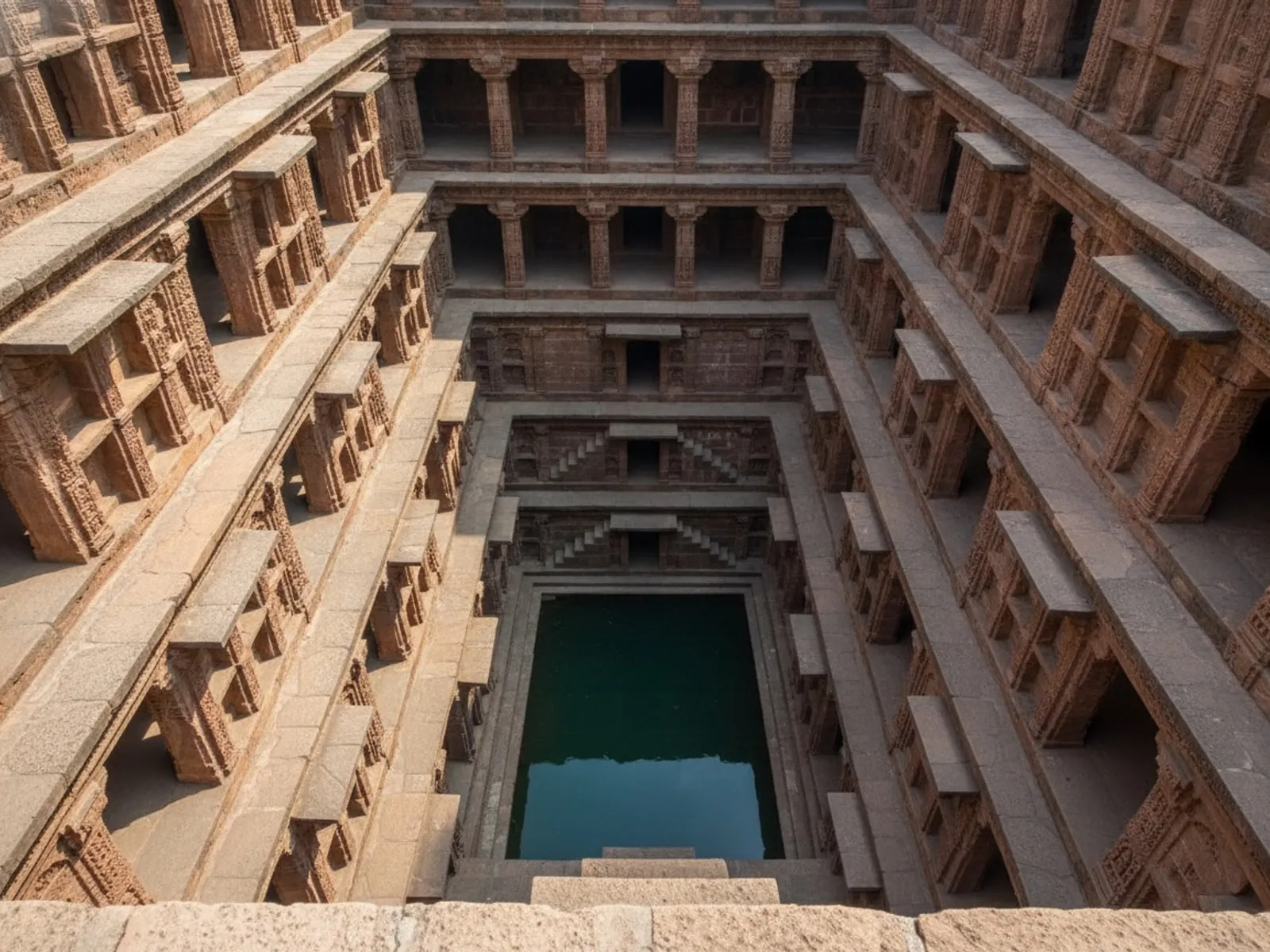
If you descend, use the public route and stop where you can move and pause without blocking others. Keep back from barriers and edges. If there is interpretation on the site, use it to distinguish the building’s historic function from current water conditions. The light and levels are still a useful subject if water is not visible.
Common questions
Do I need to go all the way down? No. Confirm what can be seen from permitted upper areas. A single view can answer a question about the descent.
When is the light most interesting? The official page suggests early morning and late afternoon for photographs, and notes that sunlight reaches the water directly only around noon. A midday visit and a late-afternoon visit show different things.
Sources
- Incredible India on Adalaj Ni Vav · checked 2026-11-24