Read a little Walden, then spend time beside the pond
Take one question from Thoreau’s book into a modest visit, without trying to recreate his life or complete an entire reading list.

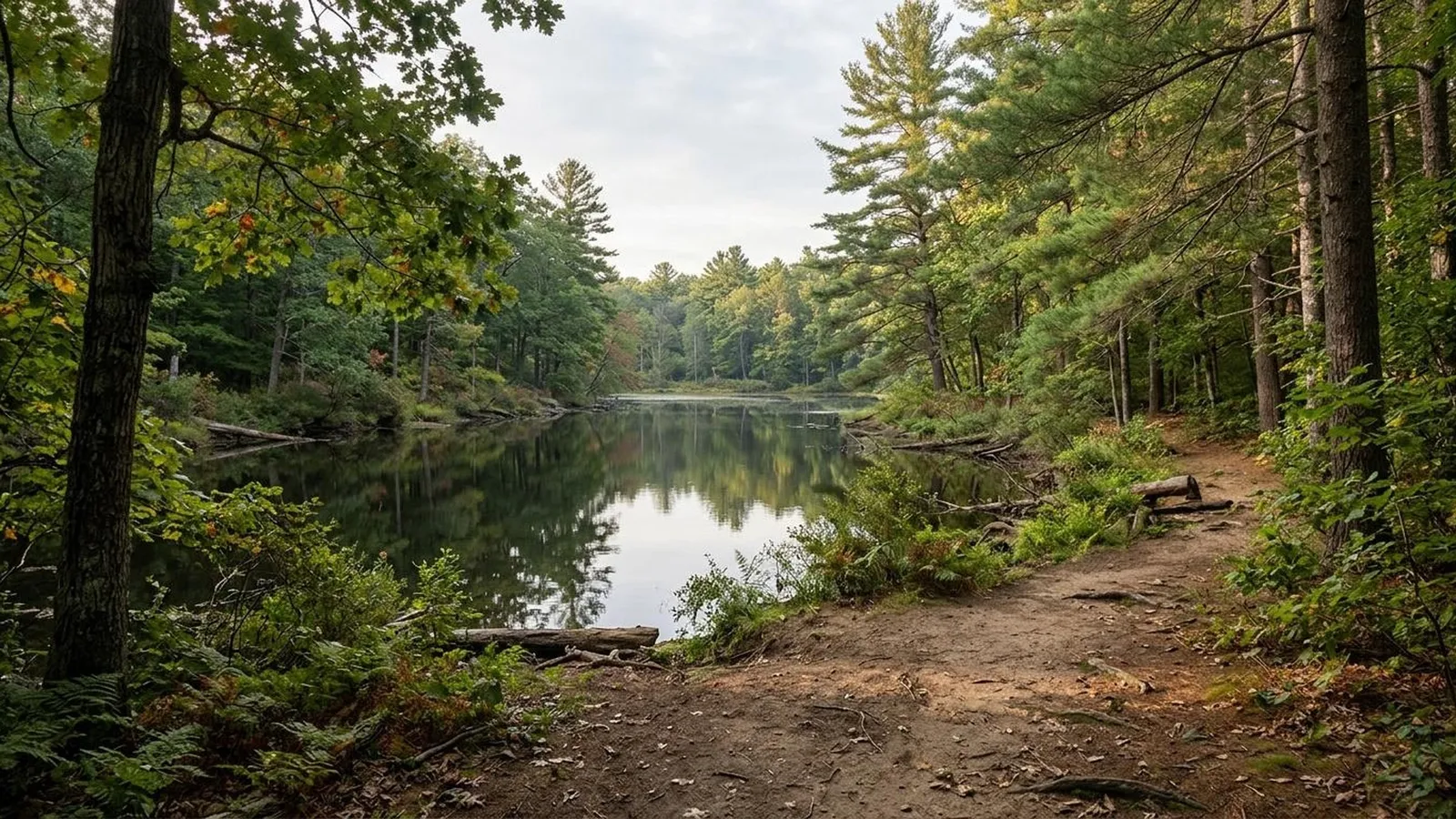
You do not have to finish Walden before visiting Walden Pond. Read a short section that interests you, carry one question into the outing and give the place time to complicate your first impression.
That might be a question about attention, ordinary needs or what it means to choose how you spend a day. The visit can be part of your reading, even if you return home disagreeing with the author.
Begin with a passage you want to think about
The National Park Service connects the pond and surrounding woods with Henry David Thoreau’s Walden and the walking lives of Thoreau and Ralph Waldo Emerson. It identifies Massachusetts DCR as the manager of the reservation. Literary and place context.
Choose a manageable passage in an edition you are comfortable reading. Write down the thought it leaves you with rather than searching for the most famous sentence to reproduce in a photograph.
Someone else may bring a different question. You can share the outing without agreeing on a verdict about Thoreau.
Let the real place answer back
On a permitted route or at a suitable stopping place, notice the actual setting: the water, the trees, other visitors and the movement of an ordinary day. Do not require it to look like an illustration of literary solitude.
A place can be meaningful while being shared. Give other people room, follow the reservation’s rules and use only places where stopping or sitting is permitted.
Try spending a little time without reading or taking photographs. Then return to the passage and ask whether being there changes the question you brought.
Keep the historic story and the current visit separate
A writer’s account belongs to its circumstances. The public reservation you visit has its own management, access arrangements and other uses today.
Check current DCR information for routes, closures, seasonal hours and parking. DCR closes the car park when capacity is reached; buying a parking pass does not override that closure. Current visitor information. If you want to visit a particular historic feature, establish how to reach it using the route available that day rather than following an old map blindly.
Do the same for access needs. A route described as accessible elsewhere may be affected by works or temporary conditions. This article proposes a literary outing, not a verified all-clear for a particular trail.
Make a small reading ritual of it
You could read at home before leaving, spend time at the pond and write a few sentences afterward. There is no need to read a book in public if that makes you feel you are performing the experience.
A companion might prefer a conversation afterward: what seemed persuasive, what felt distant from life now, and what you would like to read next. Keep the disagreement if it makes the book more interesting.
Our one-work reading project offers a way to turn a large literary ambition into a manageable beginning. Walden gives that project a possible place to visit as well.
Take the question home
The most useful result may be something small you try afterward: paying closer attention during a familiar walk, keeping a note of what you notice or returning to a passage that initially annoyed you.
You have connected a book with a real place without needing to imitate its author. That leaves room for a reading life of your own, with another place and another book whenever you are ready.
Sources
National Park Service on Walden Pond and its literary connection