Explore a small landscape at Abkhazi Garden in Victoria
Victoria’s one-acre Abkhazi Garden offers a focused encounter with rock, mature trees and garden design; access and opening days need their own check.

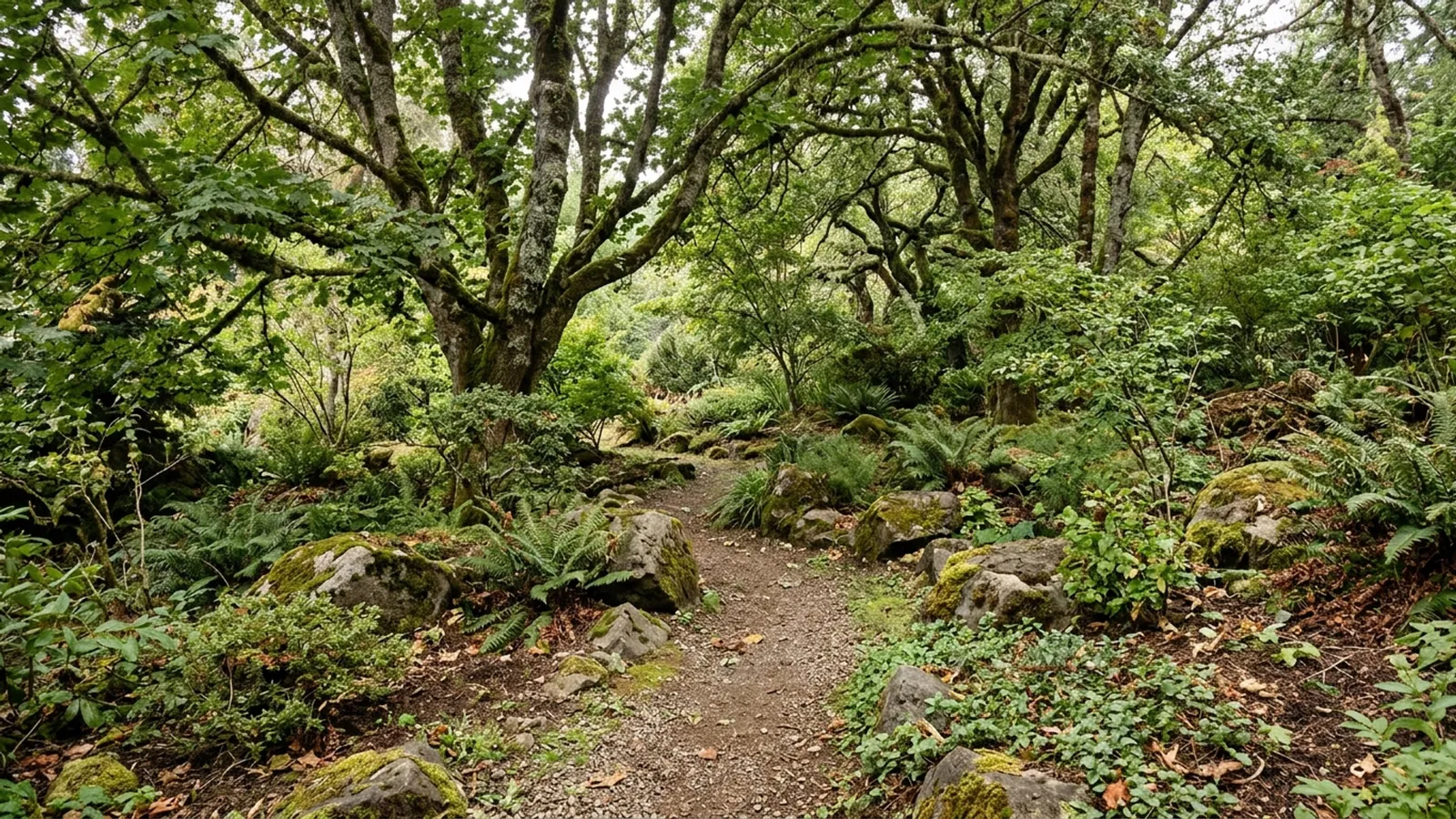
A garden does not have to be enormous to change the way you look at a landscape. At Abkhazi Garden in Victoria, the useful question is how a small site becomes a place with different views, levels and moments of attention.
This is an outing for noticing rather than collecting a long list of attractions. Give the garden a modest amount of your day, choose a comfortable route and let one design choice hold your attention. Afternoon tea can be a separate addition, not the definition of the visit.
Look for the landscape underneath the garden
The Land Conservancy of British Columbia’s garden history, checked November 17, 2026, describes a one-acre property shaped by rocky slopes and native Garry oaks. Nicolas and Peggy Abkhazi began creating the garden in 1946. TLC purchased it in 2000 following a campaign against redevelopment.
Those facts offer a way into the experience without requiring you to recognize every plant. Look for where a route follows rock, where a tree shapes an opening and where a view feels framed rather than accidental. You are observing decisions about an existing landscape, not simply counting flowers.
Let the official interpretation provide the history. It is tempting to assign a meaning to every bench or planting, but a pleasant theory is not evidence of the designers’ intention. A useful question to take away is often better than an invented explanation.
Choose one way to look
One possible approach is to follow the relationship between the rock and planting. Another is to notice how the apparent size of the garden changes as you turn. A third is to look at the way mature trees affect the spaces beneath them.
These are suggested exercises, not a prescribed route or a guided-tour itinerary. Pick one rather than trying to complete all three. Stop where you can do so without blocking the path, then change your position slightly and see what becomes visible or disappears.
You do not need botanical expertise to notice a contrast between a textured trunk, a rock surface and a planted edge. Equally, do not turn a label into a claim about when a plant will flower. Appearance changes with the season and conditions. A visit can be worthwhile without matching a promotional photograph.
Plan for the paths you can comfortably use
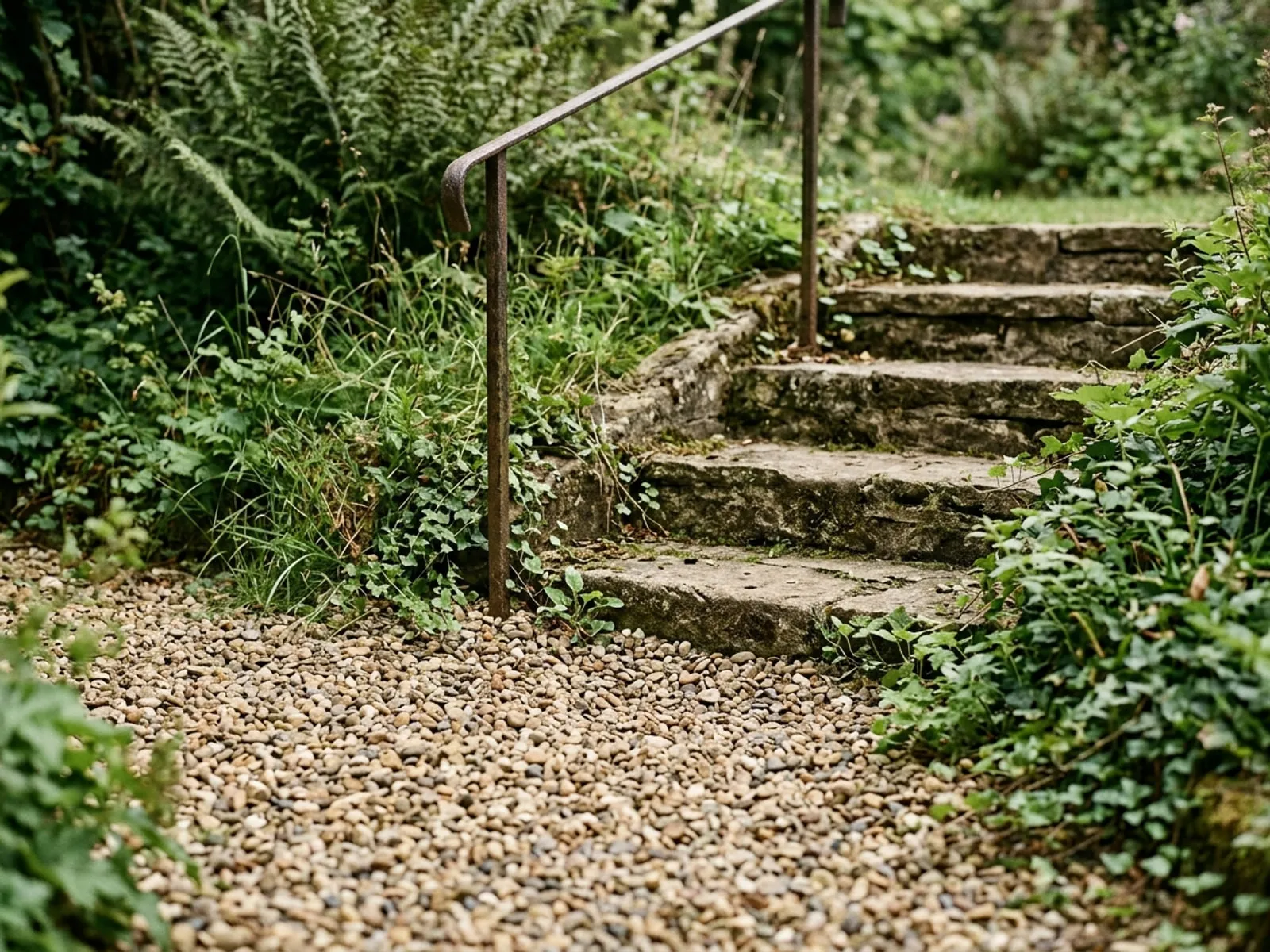
The official visitor page says many garden paths are gravel or have steps that may challenge people with mobility needs. It describes the teahouse as wheelchair accessible, which is not the same as saying the whole garden has a step-free route.
Ask about the parts you want to reach and your specific requirements. “Can I visit without using steps?” is more useful than assuming a general accessibility label covers every path. Weather and footwear are also worth considering for an outdoor visit.
Allow roughly an hour as a flexible personal plan, not an official timed visit. You may want less walking or more sitting; the point is to leave enough space for the experience rather than race around a small garden simply because it is small.
Check the day, not just the season
The visitor page lists different summer and winter arrangements, with month-specific winter information. As read November 17, 2026, November opening is Wednesday through Sunday, while December is listed as daily subject to the stated holiday closures. Do not turn that into a permanent year-round promise.
Check the current page before traveling, especially around holidays. The garden is at 1964 Fairfield Road in Victoria. Use that address to plan your actual journey and return; an outing away from the center still needs to fit the day you have available.
Admission is described as a suggested donation supporting TLC’s operation and maintenance. No current amount is quoted here. Transport, any tea reservation and the garden contribution are separate parts of the outing’s cost.
Make tea a separate decision
TLC says the teahouse is a separate business operating from the heritage home. If tea matters to your plan, check its own booking arrangements, menu, dietary provisions and last seating. Garden opening does not by itself confirm a table.
An invented example makes the distinction clear: a visitor has a free afternoon but no tea reservation. A garden visit may still be the intended experience, provided the garden is open. Someone traveling specifically for a meal needs a confirmed meal arrangement as well.
Neither option is a more authentic visit. Decide whether the appeal is the landscape, the meal or the combination, then arrange each part accordingly.
Keep Victoria around the outing
Use Victoria’s place page to place the garden in a wider visit. The Royal BC Museum guide offers an indoor encounter with natural history; it is an alternative kind of attention, not a second appointment you must add to the same afternoon.
For a slower trip, RESTED’s guide to leaving days unplanned is a useful companion. You might leave the rest of the day open rather than make the garden a brief gap between larger bookings.
One useful souvenir is a note about a design idea you noticed: a path that changes the view, a tree given room or a planted pocket beside rock. That can make an ordinary garden near home more interesting after the trip ends.
Common questions
Is this the same outing as visiting Butchart Gardens? No. This guide concerns Abkhazi Garden at its Fairfield Road address. Check each garden separately rather than treating Victoria’s gardens as interchangeable.
Does a teahouse booking include every garden arrangement? Do not assume so. Confirm what your particular booking includes with the businesses concerned.
Is the whole garden wheelchair accessible? The operator warns about gravel and steps. Discuss the route and facilities you need before planning the visit.
Sources checked November 17, 2026: TLC garden history and stewardship; TLC hours, access and directions.