Meet Vasa as a ship people built, not just a spectacular wreck
Give Stockholm’s preserved ship a question to answer, then use the museum’s interpretation to look beyond its scale.

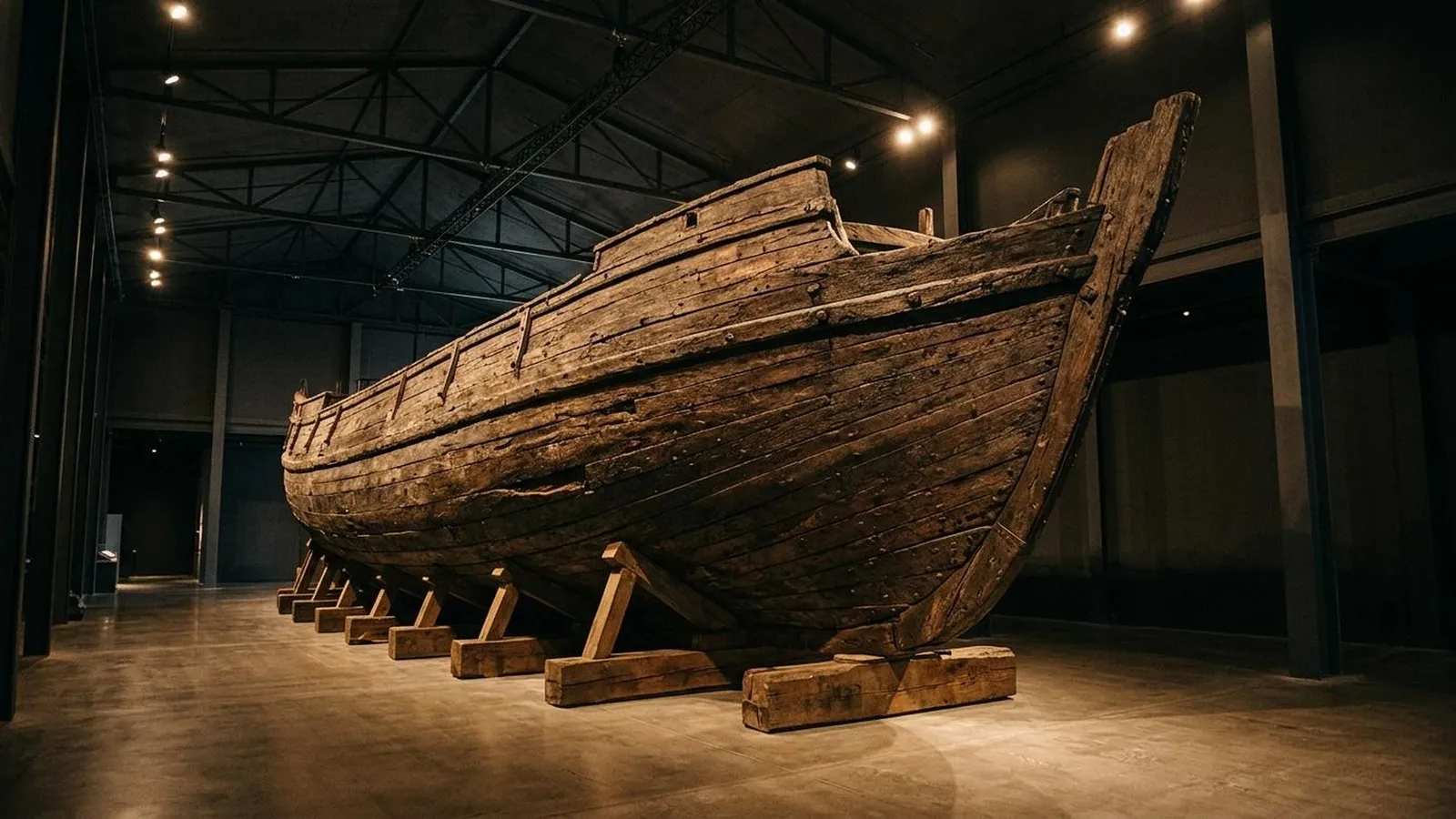
A large surviving ship can defeat your attention by being so impressive. You stand back, take the photograph and discover that you have noticed its size without learning very much about it.
At Stockholm’s Vasa Museum, give yourself another ambition: leave able to explain one decision someone made about the ship, and one question you still have. That turns a celebrated object into a conversation about work, people and consequences.
The museum’s history follows Vasa’s construction, sinking in 1628 and later recovery. You do not need to arrive knowing the full account. Bring enough curiosity to want more than the familiar ending.
Begin with the ship, then choose a thread
Take in the overall form before trying to read every explanation. What interests you first: how people worked aboard, the purpose of the decoration, or how an enormous wooden object can be preserved?
Choose one of those as your thread. It need not be the most technical question. Someone interested in interiors might notice arrangements for living; someone who enjoys making things may want to understand a construction choice. Your companion can follow a different thread without either of you taking the wrong route through the museum.
After that first look, use the interpretation to test what you thought you saw. A feature can look obvious from a distance and become more interesting when its purpose is explained.
Use a little guidance before adding more galleries
The museum currently describes an included guided tour around the ship lasting about twenty-five minutes, as well as downloadable audio guides in several languages. Check the day’s language and schedule rather than assuming a particular departure. Plan the visit.
A short introduction can give the rest of the visit a shape. Listen for one explanation you would not have worked out alone, then return to the object or view it relates to. You are looking again with a better question.
Treat this as a museum encounter with the vessel. Do not turn “tour around the ship” into an expectation of boarding it or walking through working cabins.
Make room for the visit you can enjoy
As checked in November 2026, the museum does not admit large or wheeled bags and has no luggage storage. Plan luggage elsewhere before using the museum as the gap between checking out and leaving Stockholm. Its visitor information also describes lifts to the museum floors; discuss your particular requirements rather than treating that as a complete assessment of every part of the experience.
Choose a modest amount to do afterward. A pause over a drink can be useful time to compare what each person noticed. The question worth asking is not how many museum rooms you completed, but what changed between your first and last look at the ship.
You might leave wanting to read about preservation, shipbuilding or the people whose lives surrounded Vasa. That is a satisfying result for a first encounter: something remarkable has become more particular, and therefore easier to remember.
Sources
Vasa Museum visitor arrangements