Follow a tapestry design from paper to cloth in Madrid
Book a guided visit to the Royal Tapestry Factory and use one small detail to understand how a full-size design reaches the loom.

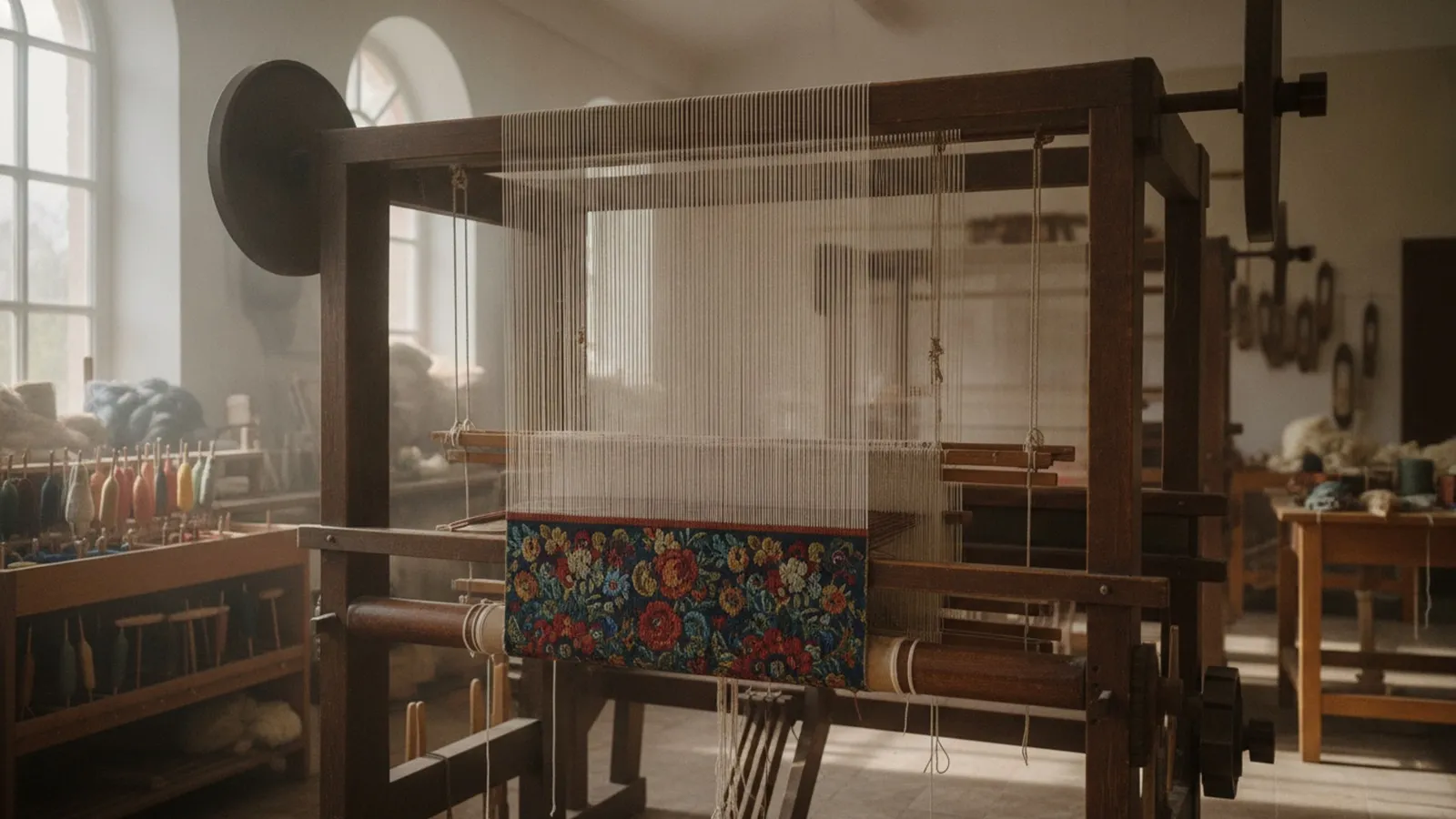
At Madrid’s Royal Tapestry Factory, ask how a shape on paper becomes a shape in cloth. That question gives you a way to look at the design, the threads and the loom during one guided visit, even if the workshop is working on something different that day.
Book the working-factory visit
The Real Fábrica de Tapices is at Calle Fuenterrabía 2. Its guided-visit page says workshop access is by advance-booked guided tour and lists tours in Spanish and English. Email the address listed on that page with your preferred language and date and the visitor details it asks for. Tours are confirmed subject to availability. The page asks for payment by bank transfer to secure a place and lists a free Monday morning tour. It does not say which language that tour uses, so ask before planning around it.
The factory asks visitors to wear sturdy, closed shoes and suitable clothing for an active workplace. It prohibits photography and recording without prior permission. If you need a step-free route, seating or a particular position to see the loom, ask whether the tour you are booking can accommodate that before you pay. Madrid’s official visitor page lists Menéndez Pelayo, Atocha and Estación del Arte as nearby Metro options. Check which station and exit work for you.
Begin with the full-size drawing
The factory calls its full-scale design a pasteboard in its manufacturing account. You may also hear it called a cartoon. The factory uses the model to guide the weaving and dyes material for the individual project. Look for one feature you can follow, such as the outline of a leaf or a transition from a dark area into light.
Ask where the weaver finds the information for that feature. The full outline may be in the drawing, while the shade depends on which thread goes into a particular section. If you see a finished piece and a workshop demonstration on unrelated projects, you can still use the same question at both. In the finished piece, see which detail reads from across the room. In the workshop, ask how the design helps the weaver produce a detail at that scale.
Take one question from the tour
Write down the question that stayed with you once you are outside. If the relationship between drawing and cloth was hard to see in person, reread the factory’s manufacturing account, which starts with the pasteboard and describes how material is dyed for each project.
Keep the Art Walk manageable with three paintings at the Prado, or compare the booked workshop visit with Dovecot’s tapestry viewing balcony in Edinburgh.