Make an illustrated record of a place you know
Six small drawings can preserve the character of an ordinary place more personally than another folder of photographs.

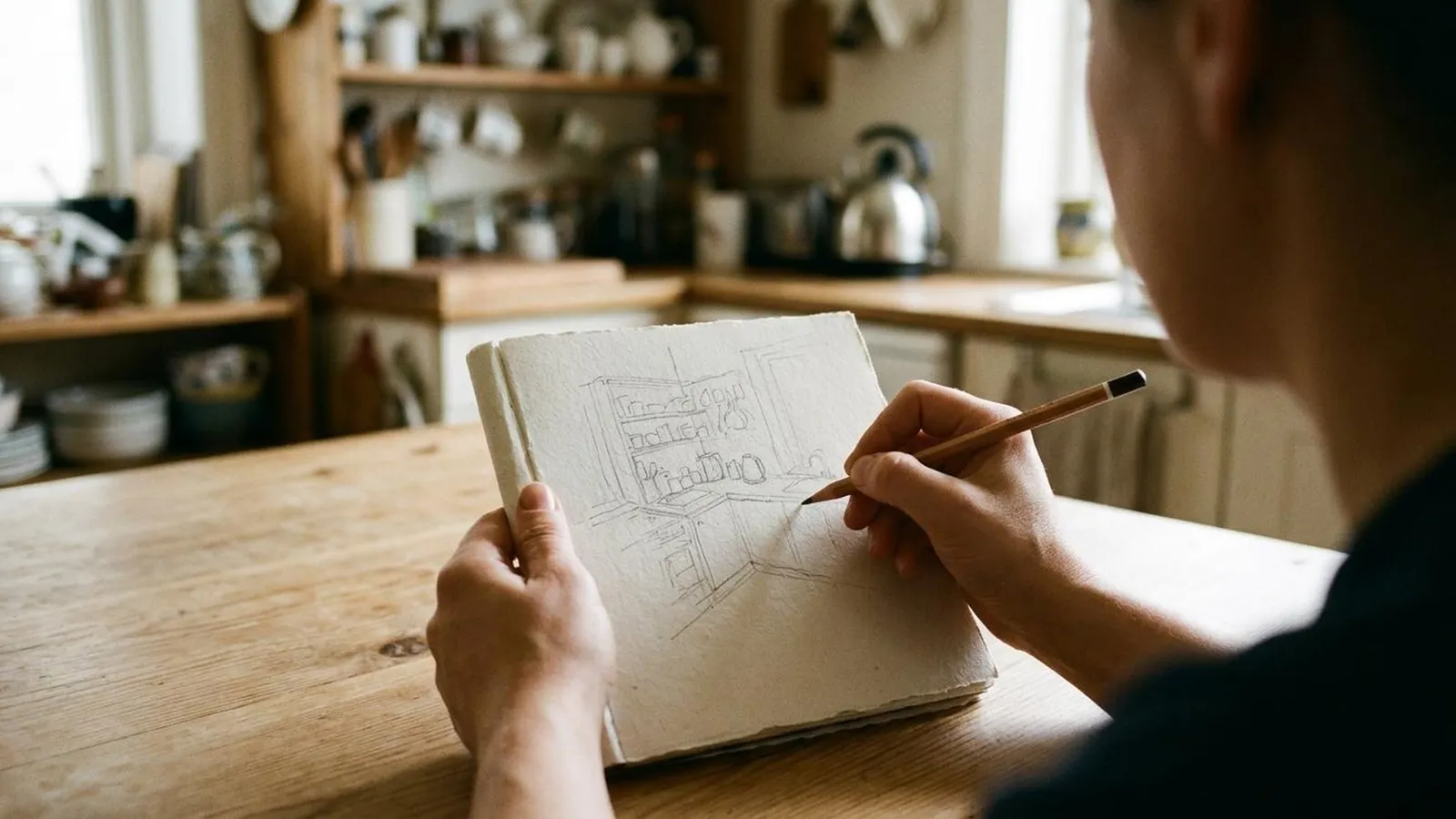
A place does not have to be famous to deserve a record. It might be the kitchen where everyone ends up talking, the corner café you have used for years or a view from the same bench on your usual walk. Familiarity can make these places almost invisible. Drawing gives you a reason to look again.
Set yourself a modest project: six drawings of one place, gathered into a small illustrated record. It can be done at home or somewhere you are welcome to spend time. You need no trip, booking or public audience.
Choose somewhere with a reason
Pick a place you would miss if it changed. That gives the project a purpose beyond practicing a skill. A family dining table may be more meaningful than a landmark selected because it looks impressive in someone else’s sketchbook.
Make the six drawings different kinds of attention. Start with the overall space. Then choose a small object, an edge or doorway, a repeated pattern, a view looking out and one detail you associate with a memory. These are suggestions, not a formal drawing course. Change them to suit the place.
For a kitchen, the set might include the room from the doorway, the old kettle, a cabinet handle, the tiles, the window and a chair with a particular history. None has to be a polished standalone picture. Together they begin to describe what that room means to you.
Use materials you will actually carry
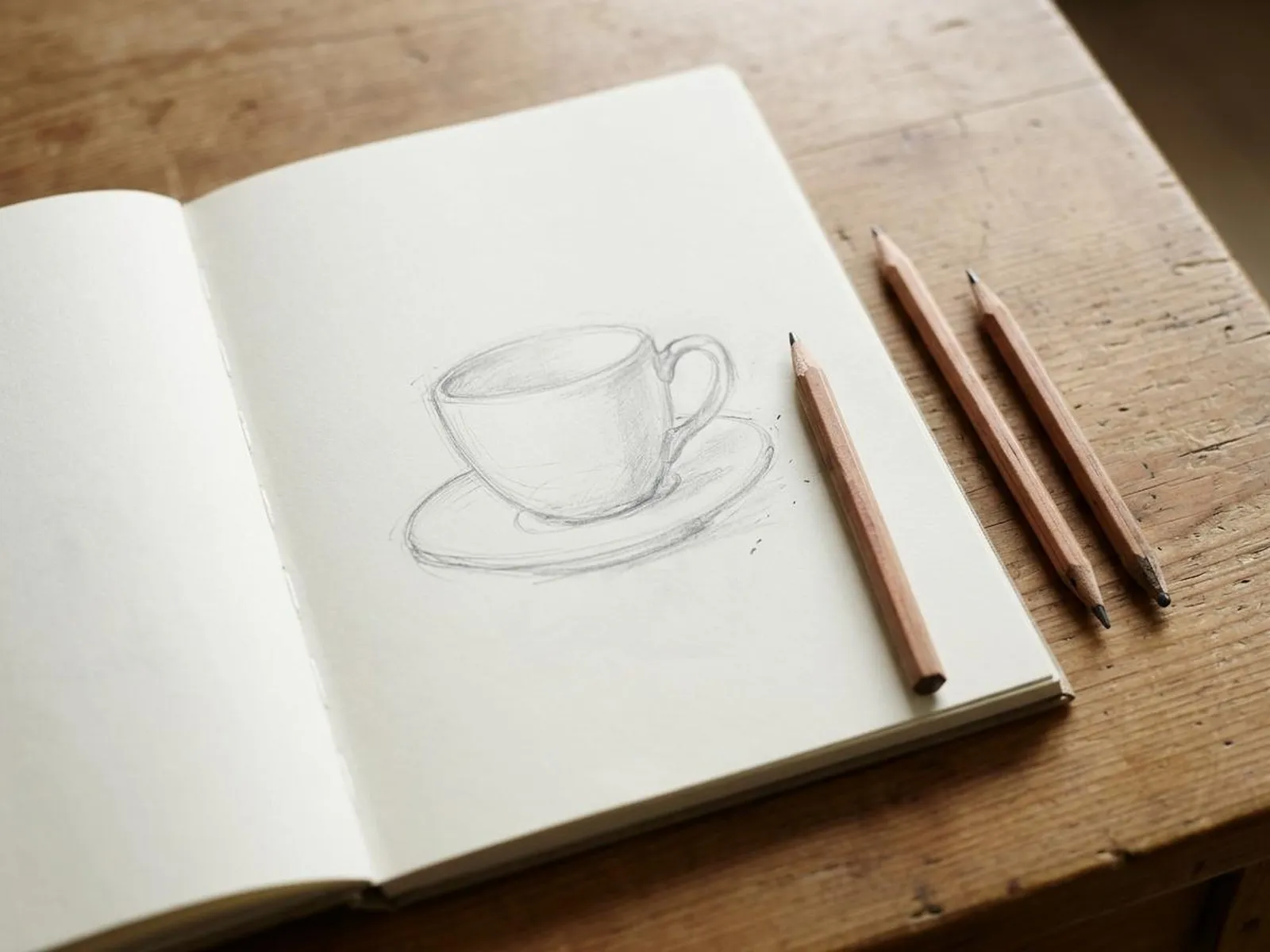
A pencil and ordinary paper are enough to begin. Keeping the equipment simple makes it easier to return to the project. If you want to experiment later, the National Portrait Gallery’s drawing resource explores how artists use different materials and techniques. Its examples are portraits; you can borrow the invitation to experiment without treating it as a course in architectural drawing. Drawing techniques and materials
Give each drawing a small area of the page rather than an intimidating blank sheet. Try working for fifteen minutes, then decide whether to continue. That is a suggested starting allowance, not a deadline. You may enjoy finishing the whole set in one afternoon or adding a page over several visits.
If perspective becomes frustrating, choose a smaller subject. A handle, a cup or the shape of a shadow can hold plenty of character. The project does not depend on producing a technically convincing view of the entire room.
Add what the line cannot show
Beside each drawing, write a few words about what you noticed. Record the date and perhaps a sound, an association or a change you had forgotten. Separate observation from recollection: “the paint is worn here” and “I remember this being blue” tell different kinds of truth.
For a shared family place, you could invite someone else to choose the final detail. Ask before including a person’s story, belongings or private space in anything you plan to share. A café or other venue may also have its own rules about drawing, photography and lingering. Choose a position that lets people use the place normally.
Finish by assembling the six pages, giving them a title and adding one short paragraph about why you chose the place. A folded booklet, a folder or a few photographed pages will do. You do not need to buy a frame or launch a public project to make it complete.
The record may be charming, awkward or both. Its value is that it could only have come from your attention to that particular place. Long after an ordinary room changes, the uneven line around an old kettle may recall more than you expected.