See Christmas Island’s red-crab migration on nature’s timetable
A remarkable Indian Ocean wildlife journey whose timing depends on rain and the moon, rather than a guaranteed festival date.

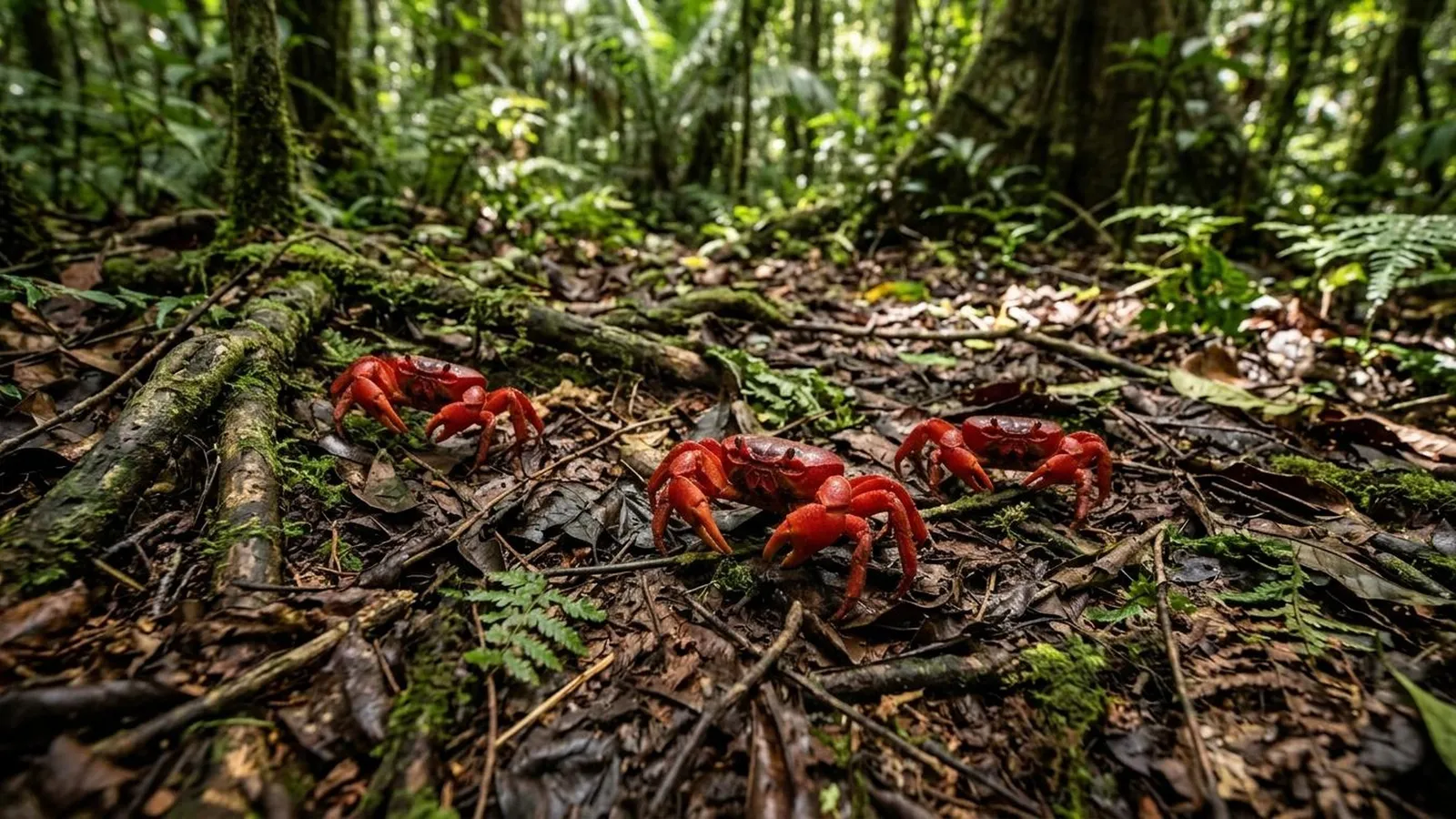
For much of a journey, wildlife is something you search for against the landscape. On Christmas Island, the red-crab migration can change the way the landscape itself appears to move. Crabs emerge from the forest and head toward the sea to breed, crossing ground that people also use to get around.
The island here is Australia’s Christmas Island in the Indian Ocean, not Kiritimati in the Pacific. The experience belongs on a list for someone fascinated by natural processes and willing to build a trip around uncertainty. It is a poor choice if success depends on witnessing one precise scene on one fixed afternoon.
The calendar gives you a window
Parks Australia says the migration begins with the wet season’s first rainfall, usually in October or November, but sometimes as late as December or January. Lunar timing also influences the migration and spawning. A season description therefore cannot promise when the spectacle will meet your travel dates. Parks Australia migration guide
Decide which part interests you before planning. Seeing crabs moving through the landscape is different from witnessing the release of eggs at the coast. Photographs from those stages can make them look like interchangeable versions of the same outing; they involve different timing and viewing circumstances.
For a first visit, a flexible aim is to understand the migration and observe whatever stage is occurring responsibly during your stay. Use the park’s latest updates and local guidance to refine that plan. Treat forecasts as help with a decision, not as a reservation nature must honor.
Access restrictions are part of the experience
Road closures protect the animals while they move. They can also change which places visitors can reach and how long a journey takes. Check the official access alerts and Road Access Board, then follow current signs and staff directions. A route that worked for a previous visitor may be unavailable when you arrive. Park access alerts
Follow closures and staff directions rather than stepping into a restricted area for a photograph. Ask where visitors can watch without obstructing the migration, and avoid moving animals to compose an image. The park describes carefully walking among crabs in permitted places; that is different from ignoring a closure. Observing the park’s response—the changed routes, the effort to let the animals pass—is itself part of understanding what is happening.
Allow for the possibility that your planned outing will change at short notice. If that prospect sounds like a ruined holiday, this may be an experience to keep on the longer-term list rather than book immediately.
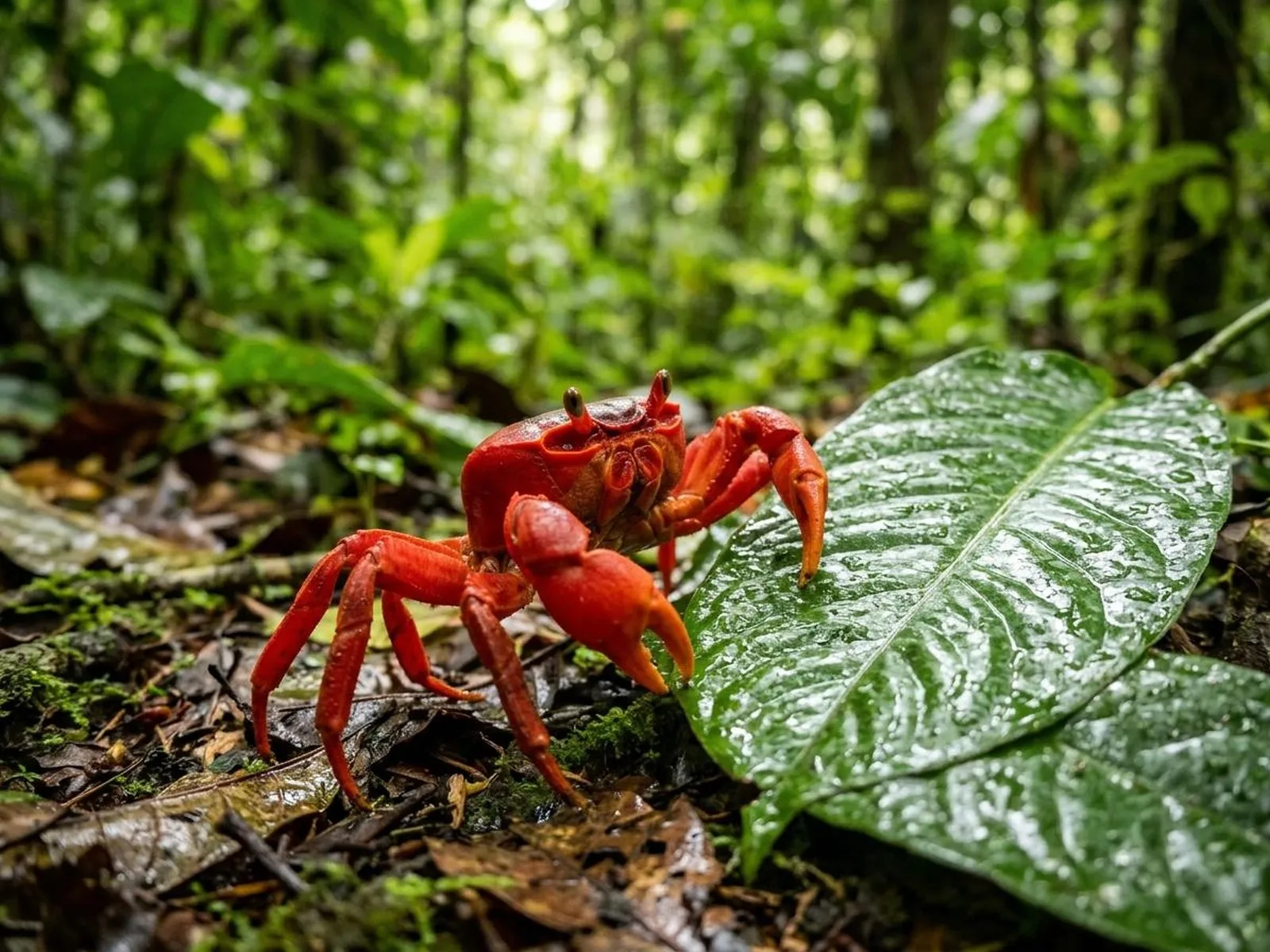
Make the whole visit worth taking
Before committing to travel, establish the transport and accommodation available for your intended period, the flexibility of those bookings and the local help you will use. A remote-island wildlife trip should not rest on a photograph’s caption and an assumed date.
Give yourself other reasons to be interested in the island. Use the national park’s visitor information to identify alternatives that are open and appropriate for the conditions. Extra days provide room to adapt; they still do not guarantee a particular wildlife event.
Plan your viewing around standing back and spending time, rather than collecting the closest possible image. Bring whatever observation or camera equipment you can comfortably use without entering the animals’ path, and let current local advice determine the practical arrangements.
The satisfying version of this milestone is not “I stood on this exact beach at this exact minute.” It is “I went to understand and observe a remarkable migration, and let the conditions shape the visit.” That approach leaves room for awe without turning the animals into a performance you have purchased.