Make something you will use: a first green-wood carving workshop
A kitchen spatula or butter spreader can become a lasting reminder of a day spent learning with your hands.

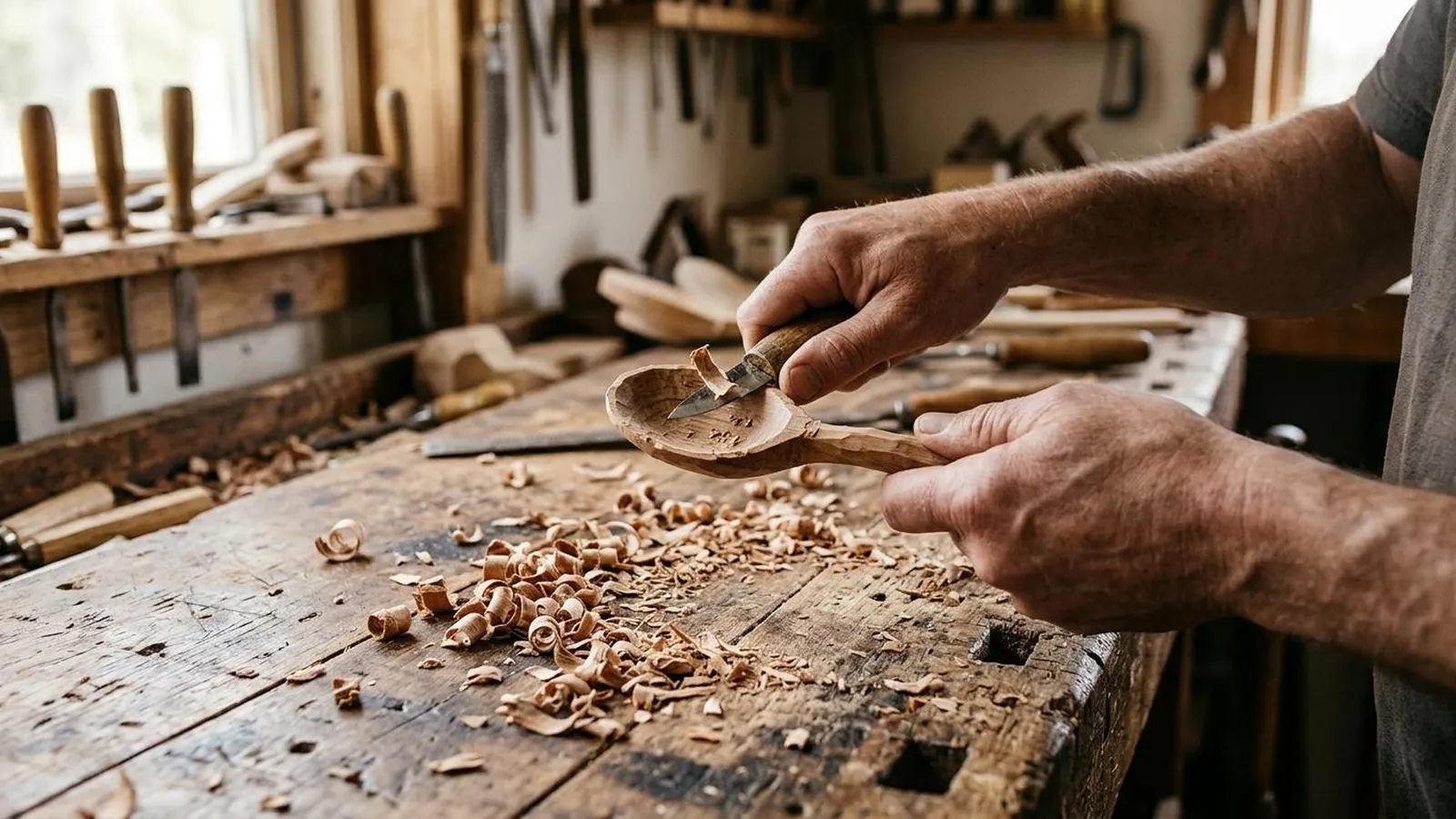
A useful object has an advantage over many holiday souvenirs: you can keep meeting it in ordinary life. You pick it up to make lunch and remember the day you learned to shape it.
That is the appeal of a small carving workshop. The ambition is not to become a master woodworker before you leave. It is to make something, understand a little more about the material and discover whether you enjoy the process.
Choose an object small enough to finish learning about
The Green Wood Guild’s introductory workshop page describes green-wood carving sessions for spatulas and Swedish-style butter spreaders. It gives a concrete example of the kind of useful object a first class can center on.
The provider’s contact page lists its base at Stepney City Farm in London; confirm the venue for the session you choose.
That page is a course description, not proof that a place is available on a date you want. Ask for current dates, venue, eligibility and booking terms before planning travel around it. The page states adult-only attendance and restrictive cancellation conditions; read the terms attached to the actual booking.
A good first class gives you permission to be a beginner
Look for instruction appropriate to your experience and an explanation of how tools and materials are supplied. Ask how many participants share the tutor and what support is available if a task proves difficult.
This is not an activity to improvise from a paragraph on the internet. Follow the instructor’s safety guidance and describe anything that may affect how you grip, sit, stand or concentrate. This guide is an invitation to supervised learning, not carving instructions.
You do not need to arrive with an ambitious design. A modest object that you understand is a better starting goal than a complicated one you cannot safely make.
Let the object have a job
Imagine choosing a butter spreader because breakfast is something you enjoy preparing. Its value will not depend on whether it looks like a shop-bought utensil. You will have chosen the shape, made decisions and learned why some of them work better than others.
Before starting, ask what is realistic within the session and what finishing or care the object needs afterwards. Do not assume that “take home” means immediately ready for every kitchen use.
If a different craft appeals more, keep the same principle. Choose one useful result and a real beginner class with enough teaching to make the process enjoyable. An attractive photograph alone says little about whether the teaching suits you.

Include the quieter parts of making
There may be moments when progress feels slow or the result looks uneven. That is not evidence that you lack a hidden creative talent. It may simply be what beginning looks like.
Pay attention to one improvement you can feel: a more deliberate movement, a shape you can explain, or the point when the material stops seeming quite so unfamiliar. Ask questions while the tutor can help rather than trying to protect the appearance of competence.
If you attend with a friend, compare what you learned instead of deciding whose object wins. Different choices can make the conversation more interesting.
Decide whether this is a day or a new interest
You may be satisfied with the class and the object. You may want another supervised session. Neither outcome requires an immediate investment in tools.
Use the object as the reminder. A bucket list can contain a skill tried once, enjoyed honestly and carried back into everyday life. Sometimes the most satisfying result is something small enough to fit in a kitchen drawer.
Sources and planning notes
Researched guide; no firsthand experience is claimed. Source pages checked November 13, 2026. Confirm arrangements for your own date before booking.