Build a cardboard automaton that moves one figure
Turn a handle to make a paper figure rise or nod, then change the motion by swapping its cam.

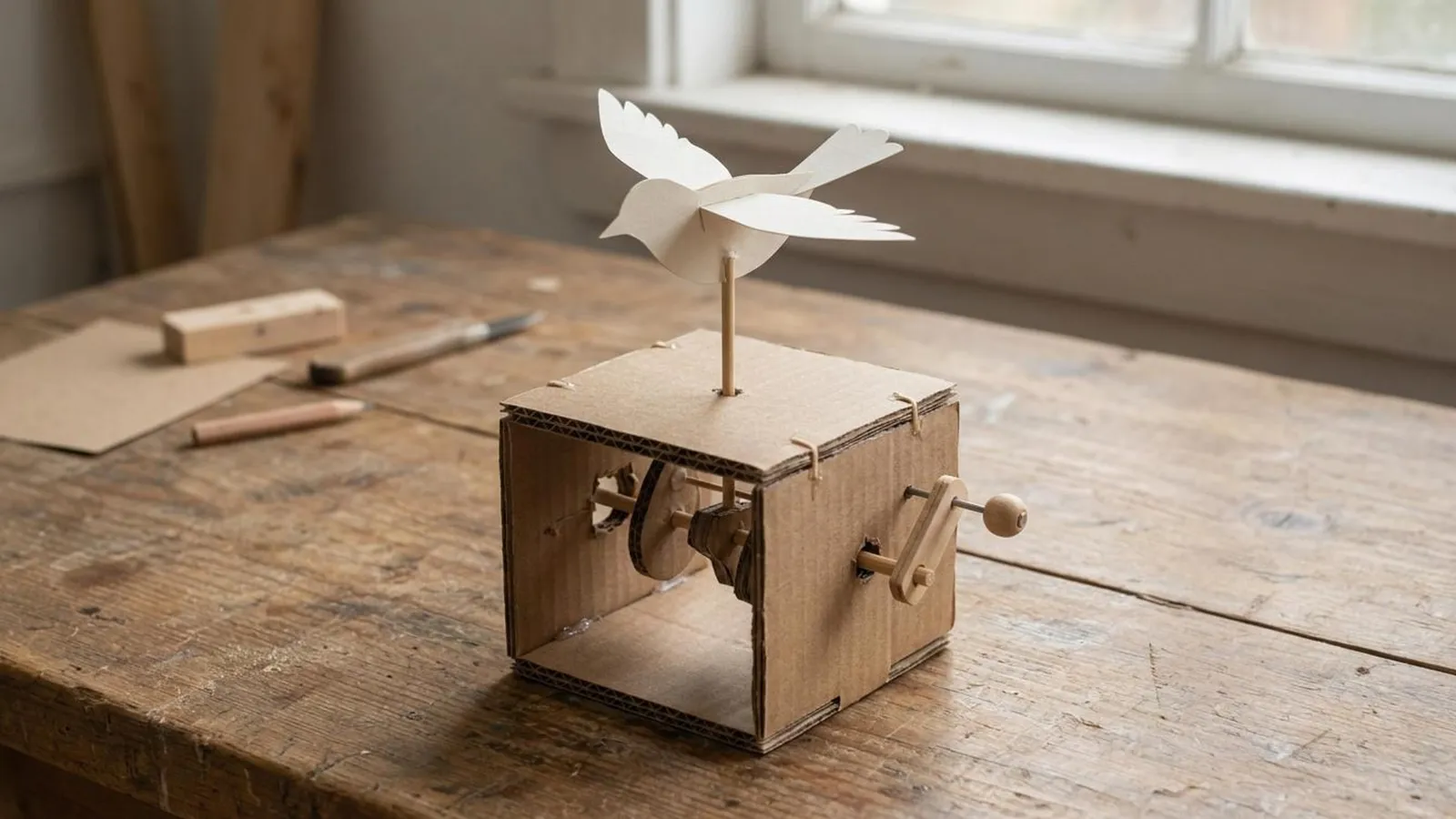
Make a paper bird peek over the edge of a box when you turn a handle. Then make it startle, bow or rise more slowly by changing the piece hidden inside. You get a toy and a small experiment in how a machine turns one kind of motion into another.
Give the moving bit room
The Exploratorium’s cardboard automata guide shows a rotating cam under a cam follower, the piece that transmits the movement to the figure on top. The Exploratorium’s workshop gallery has photos from a cardboard automata studio. Build the working part before decorating. Try a short open-sided box and a light paper figure. Leave room to see the contact point from the side and to reach the cam without dismantling the model. A stiff box holds the shaft more steadily than a tall, flimsy one.
A round cam with a shaft away from its center is a good first experiment. Rotate it by hand before attaching the bird. Check that the follower stays lined up and can drop again after the cam lifts it. If the follower doesn’t drop back, the guide suggests adding a little weight, such as a washer or nut. Otherwise support the shaft or adjust the cam’s position one small change at a time.
Change the cam and compare the motion
Make a second shape whose high point comes sooner or more sharply as you turn the shaft. Keep the box and figure the same so you can see what the new cam does. Turn at the same pace for both. Which shape creates a gentler lift? Which gives the figure more time low in the box? Make a brief note or record two small clips so you can compare the movements.
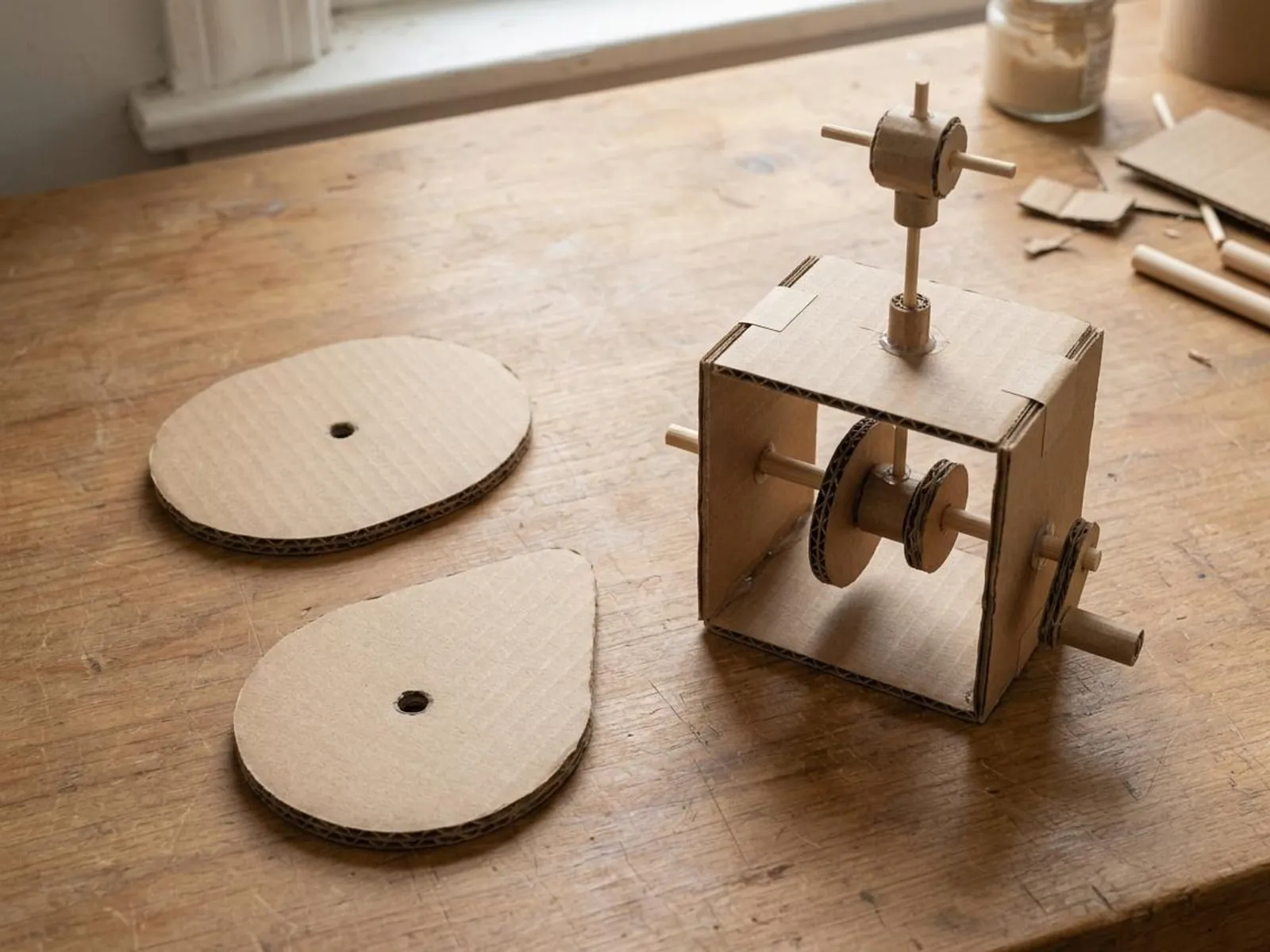
If the new shape jams, set aside the decorative goal and watch one revolution from the side. Look for the exact point at which the follower stops free movement. Trim or reposition that part and try again. You’ve completed the experience when you can demonstrate two different movements and explain which part makes the difference.
Common questions
Can I do this without preparing the cut pieces myself? Ask a helper or a maker-space host to prepare the holes and shapes. You can still assemble the model, turn it and choose which motion suits the figure.
Does it have to be a bird? Choose a light figure. A paper flag or face works and is quick to replace when you want to try another idea.
Sources
- Exploratorium cardboard automata guide · checked 2026-11-24
- Exploratorium cardboard automata workshop gallery · checked 2026-11-24